In the rapidly advancing field of medical aesthetics, the journey from a qualified medical professional to a confident, skilled injector is paved with practical experience. While theoretical knowledge forms the bedrock of safe practice, it is the hands-on, live model injectables training UK that truly builds mastery. This immersive approach is the undisputed gold standard for learning the nuanced art of administering Botulinum Toxin (Botox®) and dermal fillers, transforming academic understanding into clinical proficiency.
This definitive guide will deconstruct the entire live model training process, exploring the essential preparatory phase, the core hands-on Botox course experience, and the crucial post-training outcomes that define a truly elite aesthetic education program.
Table of Contents
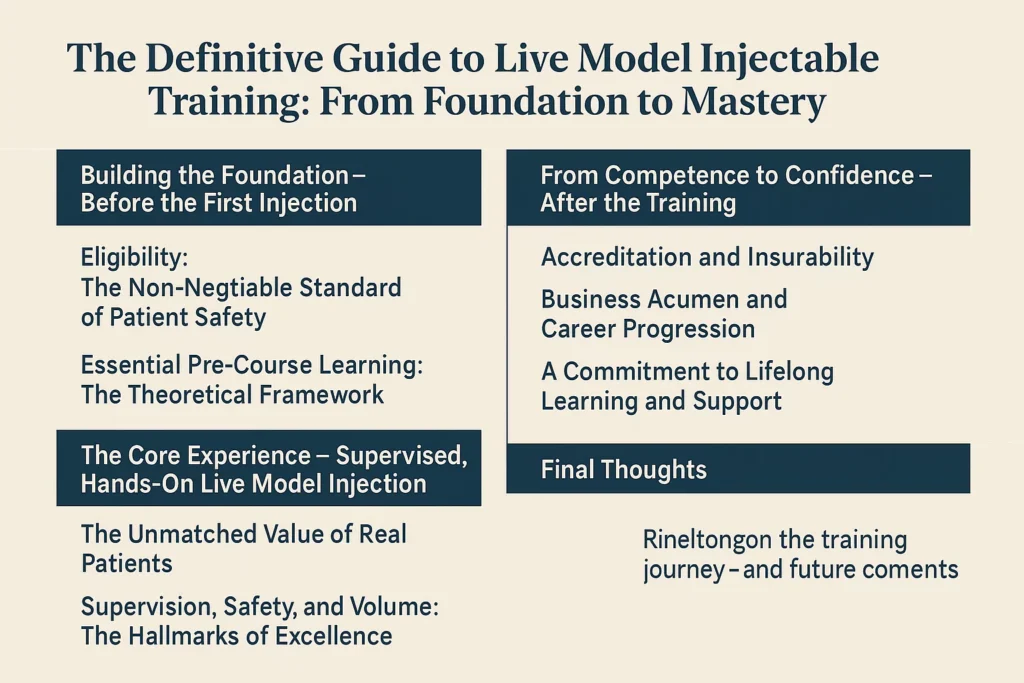
ToggleBuilding the Foundation – Before the First Injection
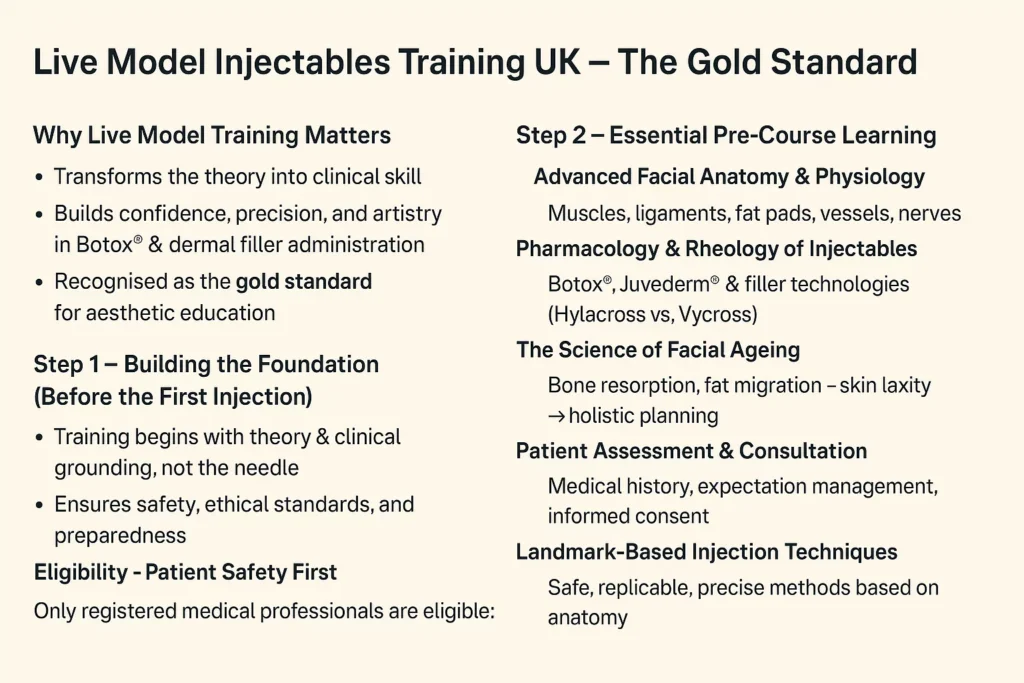
Effective live model training does not begin with a needle. It starts with a robust framework of theoretical knowledge and clinical understanding, ensuring every delegate is prepared, safe, and ethically grounded before treating a patient.
Eligibility: The Non-Negotiable Standard of Patient Safety
Reputable training academies adhere to strict guidelines established by regulatory bodies like Health Education England (HEE). Eligibility is exclusively for registered medical professionals, a critical standard ensuring patient safety and professional integrity. Eligible delegates include:
Doctors registered with the General Medical Council (GMC)
Dentists, Dental Hygienists, and Therapists registered with the General Dental Council (GDC)
Nurses and Midwives registered with the Nursing and Midwifery Council (NMC)
Pharmacists registered with the General Pharmaceutical Council (GPhC)
Paramedics and Operating Department Practitioners registered with the Health and Care Professions Council (HCPC)
Physician Associates holding membership with the Faculty of Physician Associates (FPA)
International professionals with equivalent, verifiable registrations are also frequently welcomed, subject to verification.
Essential Pre-Course Learning: The Theoretical Framework
To maximise the value of hands-on practice, delegates are equipped with comprehensive pre-course materials. This foundational learning ensures that the practical day is focused on application rather than basic theory. The essential curriculum covers:
Advanced Facial Anatomy and Physiology: A multi-layered understanding of facial muscles, fat compartments, ligaments, and crucial vascular and nervous structures to ensure precise and safe injections.
Pharmacology and Rheology of Injectables: Detailed knowledge of the products being used, including leading brands like Juvederm®, Botox®, and their specific properties (e.g., Hylacross vs. Vycross technology).
The Science of Facial Ageing: A deep dive into how bone resorption, fat pad migration, and skin laxity contribute to the ageing process, enabling delegates to develop holistic and effective treatment plans.
Patient Assessment and Consultation: Mastering the art of the patient consultation, including conducting thorough medical histories, managing expectations, and obtaining informed consent.
Landmark-Based Injection Techniques: Learning proven, replicable, and safe methods for administering injections, focusing on precise anatomical landmarks to ensure consistent and predictable results.
The Core Experience – Supervised, Hands-On Live Model Injection
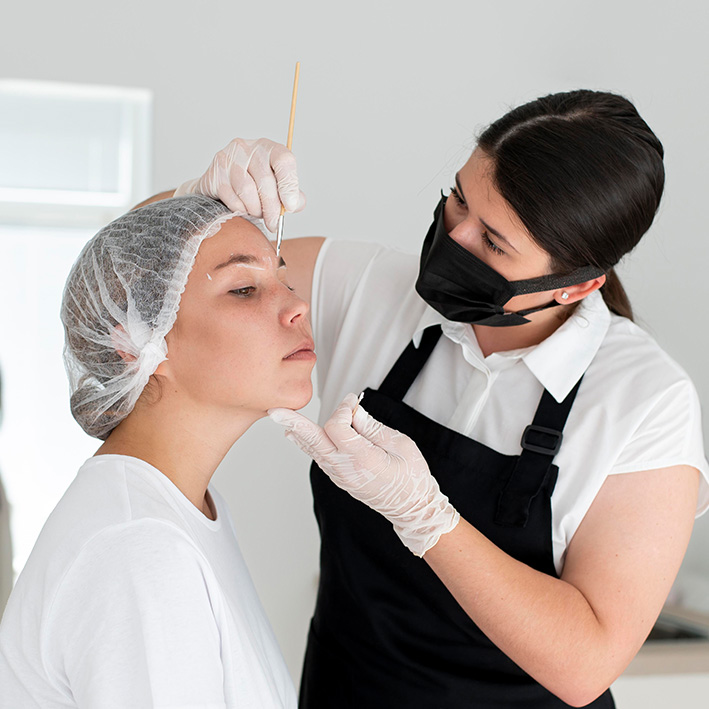
This phase is where competence is forged. While simulators and cadaveric materials are useful for initial practice, they cannot replicate the dynamic, nuanced reality of treating a live patient.
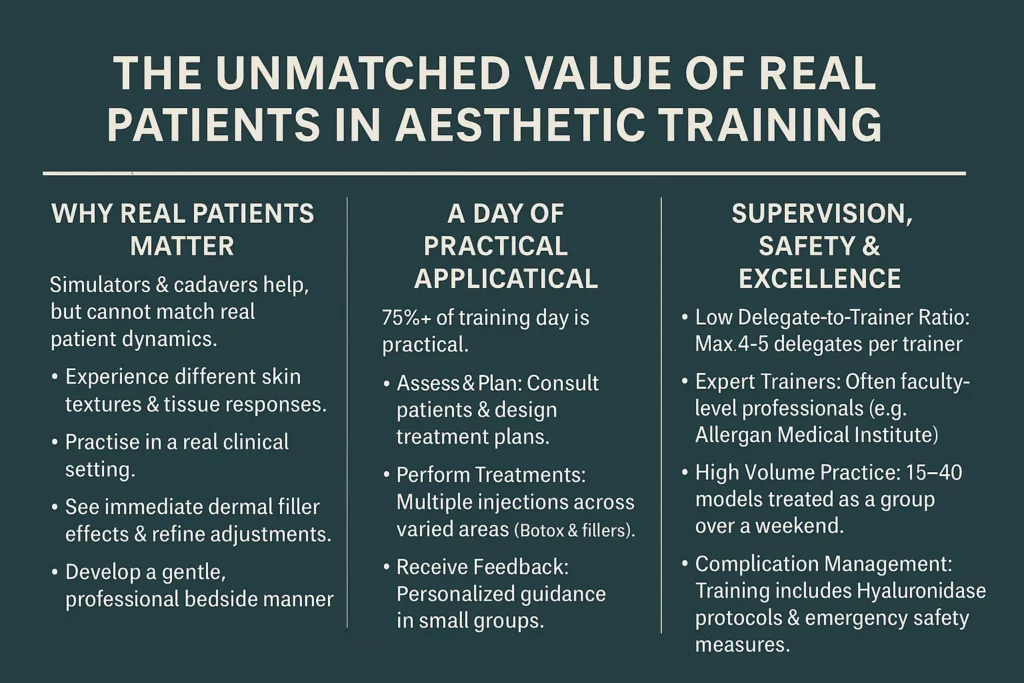
The Unmatched Value of Real Patients
Aesthetic training with real clients is considered the most vital type of experience because it allows delegates to:
- Understand varying skin textures, tissue resistance, and patient responses in real-time.
- Practise in a genuine, working clinical environment.
- Observe the immediate effects of dermal fillers, learning to make subtle adjustments for optimal results.
- Develop the gentle touch and professional patient-side manner essential for a successful career.
A Day of Practical Application: What to Expect
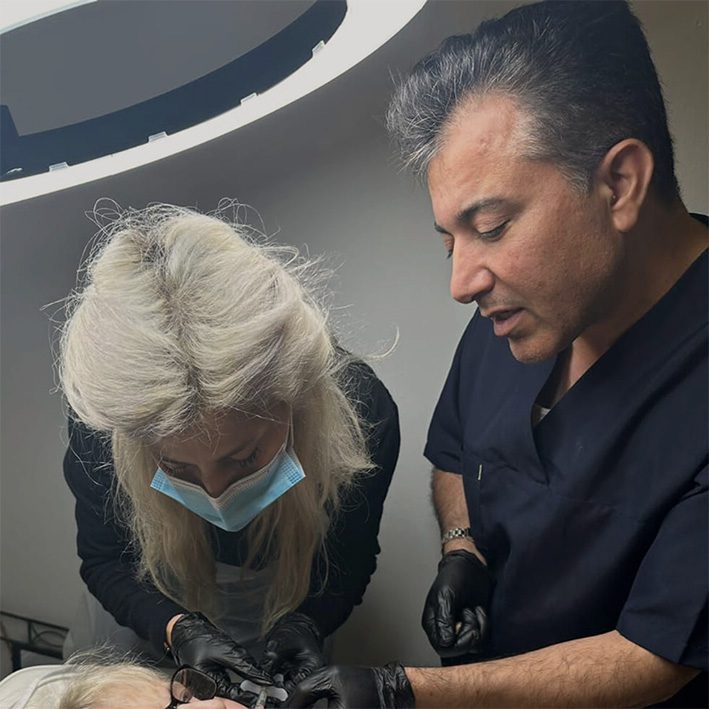
The practical component constitutes the majority of the training day, often 75% or more. During these sessions, delegates, under the direct guidance of expert trainers, will:
- Assess and Plan: Conduct consultations with their assigned models to assess facial structure and agree on a treatment plan.
- Perform Treatments: Carry out a high volume of injections across numerous treatment areas. Premier training providers ensure each delegate treats multiple models, covering a wide range of indications through dermal filler practical training and Botox procedures.
- Receive Direct Feedback: Benefit from immediate, personalised feedback from elite instructors in an intimate, small-group setting.
Supervision, Safety, and Volume: The Hallmarks of Excellence
- Low Delegate-to-Trainer Ratio: The industry benchmark is a maximum of 4-5 delegates per trainer, guaranteeing personalised attention.
- Expert-Led Guidance: Training is delivered by highly credentialed professionals, such as faculty members of the Allergan Medical Institute (AMI).
- High Volume of Practice: Delegates can expect to perform a significant number of procedures, often treating between 15-40 models as a group over a weekend.
- Complication Management: Rigorous training in complication protocols, including the use of Hyaluronidase for dissolving hyaluronic acid fillers.
From Competence to Confidence – After the Training
The journey does not end after the final injection. The goal of live model injectables training UK is to produce practitioners who are not only technically skilled but also confident, insurable, and business-savvy.
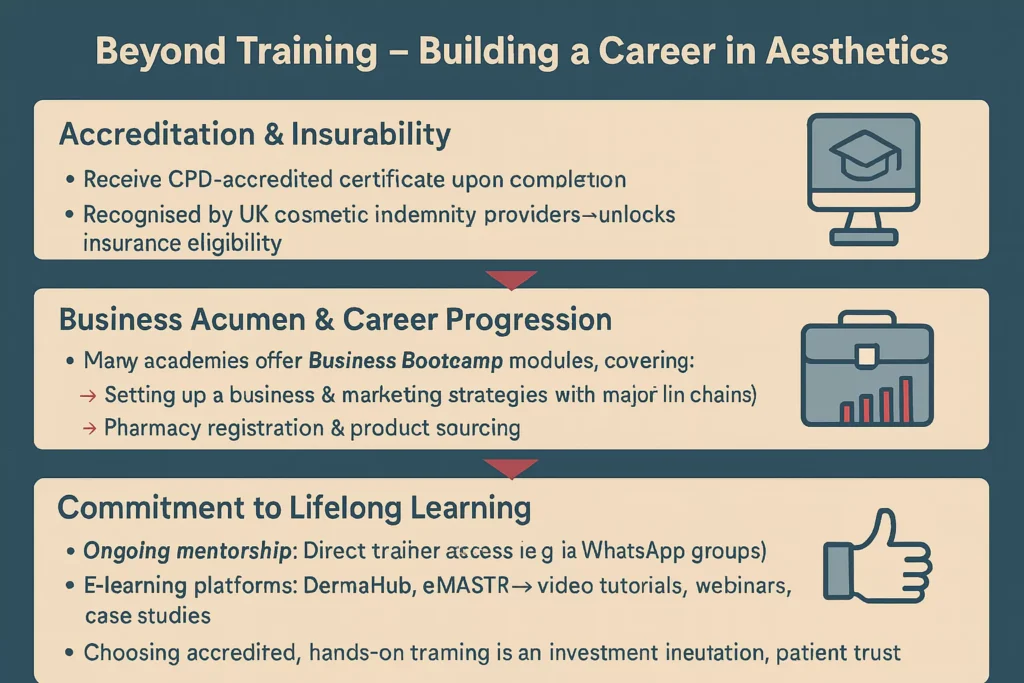
Accreditation and Insurability
Upon successful completion, delegates receive a CPD-accredited certificate, a qualification universally recognised by the UK’s leading cosmetic indemnity providers. This is the essential key to obtaining the insurance required to practise aesthetics legally.
Business Acumen and Career Progression
Many top academies incorporate a “Business Bootcamp” module. This session provides essential guidance on:
- Establishing a business and effective marketing strategies.
- Navigating employment opportunities, including partnerships with major clinic chains like Thérapie Clinic.
- Registering with pharmacies and sourcing products.
A Commitment to Lifelong Learning and Support
The best training providers view a course as the beginning of a long-term professional relationship, offering:
- Ongoing Mentorship: Direct access to trainers for advice via channels like dedicated WhatsApp groups.
- E-Learning Platforms: Resources like DermaHub and eMASTR offer extensive libraries of video tutorials, webinars, and case studies.
Final Thoughts
The journey from a qualified medical professional to a master injector is defined by the quality of practical training received. Live model injectables training UK is not merely a component of a course; it is the transformative experience that builds true clinical confidence, refines artistic skill, and ensures the highest standards of patient safety.
By choosing an accredited program that emphasises extensive, supervised hands-on Botox course delivery and dermal filler practical training, you are investing in more than just a certificate. You are investing in your professional reputation, your patients’ well-being, and a successful, long-term career in the dynamic field of medical aesthetics. Take the definitive step towards mastery and embark on your journey with a training provider that makes aesthetic training with real clients its highest priority.
Frequently Asked Questions (FAQs)
- What makes live model injectables training in the UK different from other training methods?
Answer: Live model injectables training in the UK offers real-world experience with actual clients, allowing delegates to work with varying skin textures, facial structures, and patient responses. Unlike mannequin or cadaver practice, this hands-on approach builds true clinical confidence, refines artistic skill, and ensures patient safety through supervised procedures in a genuine clinical environment.
- Who is eligible to enrol in live model injectable training courses?
Answer: Eligibility is typically restricted to registered medical professionals, including doctors (GMC), dentists and dental hygienists (GDC), nurses and midwives (NMC), pharmacists (GPhC), paramedics and ODPs (HCPC), and physician associates (FPA). International professionals with equivalent, verifiable registrations may also be accepted, subject to verification.
- How much hands-on practice can I expect during the training?
Answer: Delegates can expect extensive practical exposure, often spending over 75% of the course on hands-on treatments. In small-group settings (maximum 4–5 delegates per trainer), participants typically treat multiple live models, gaining experience across a range of indications and performing numerous Botox® and dermal filler procedures.
- Will I be insured to carry out treatments during the course?
Answer: Yes. All delegates are covered under the training provider’s insurance policy for supervised procedures. Upon completion, graduates receive a CPD-accredited certificate recognised by major UK cosmetic indemnity providers, essential for obtaining professional insurance to practise independently.
- What support is available after I finish the course?
Answer: Top-tier providers offer ongoing mentorship, lifetime access to learning platforms, and business development guidance. This can include direct trainer contact, video tutorials, case study libraries, and advice on marketing, product sourcing, and clinic partnerships, ensuring graduates are supported well beyond the classroom.