Table of Contents
ToggleBeyond the Syringe: A Career in Medical Artistry
The UK’s aesthetic industry is in a state of dynamic evolution. For medical professionals, doctors, dentists, nurses, and surgeons, it represents more than a career shift; it is an opportunity for greater autonomy, a different form of patient care, and the practice of a unique medical artistry. However, this burgeoning field is shadowed by a critical challenge: a historically unregulated and often confusing training landscape.
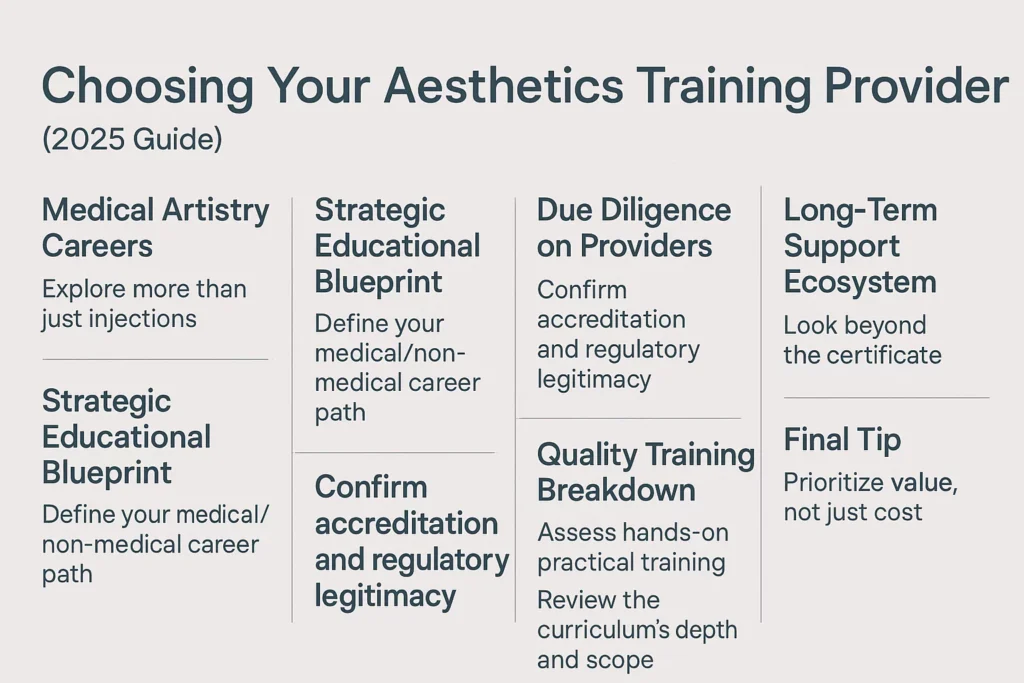
Selecting the right aesthetic course provider is the single most important decision you will make in your aesthetics career. It is the foundational investment that will dictate your clinical competence, your professional reputation, your insurability, and, most importantly, the safety and satisfaction of your future patients. The aim should be to find the best aesthetic training provider UK professionals trust, one that blends regulatory compliance with outstanding practical education.
This definitive guide provides a strategic framework to dissect the options with clinical precision. Moving beyond superficial checklists, we will explore the critical layers of due diligence, from verifying regulatory credentials to deconstructing a curriculum, ensuring you choose not just a course, but a career-long educational partner.
Laying the Groundwork – Your Strategic Educational Blueprint
Before you begin evaluating individual providers, you must first establish a clear understanding of your own goals and the complex regulatory environment. An uninformed search is an inefficient one.
Defining Your Scope of Practice: The Critical Medic vs. Non-Medic Pathways
Your current professional registration is the primary determinant of your training pathway. The industry draws a firm line between practitioners based on their foundational medical knowledge.
For Registered Medical Professionals (Doctors, Dentists, Nurses, Surgeons):
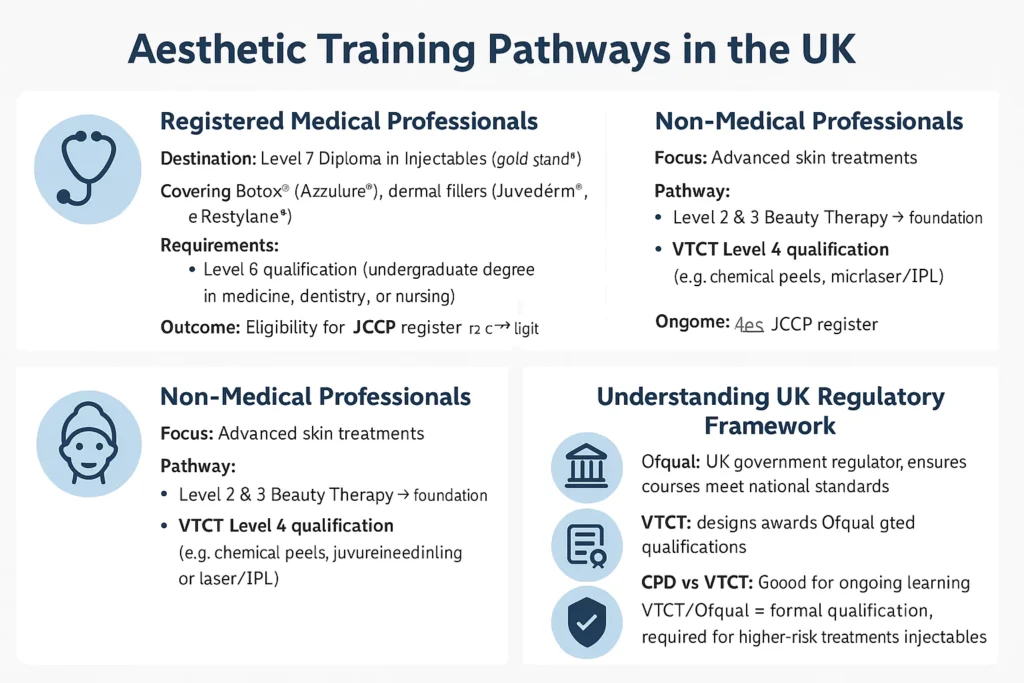
Your destination for performing injectable treatments like botulinum toxin (e.g., Botox®, Azzalure®) and dermal fillers (e.g., the Juvéderm® or Restylane® ranges) is the Level 7 Diploma in Injectables for Clinical Aesthetic Treatments. This postgraduate-level qualification is the industry gold standard and a prerequisite for acceptance onto registers like the JCCP accredited course UK register. It presupposes:
- A Level 6 qualification (an undergraduate degree in medicine, dentistry, or nursing).
- Active, valid registration with a UK statutory body: the General Medical Council (GMC), General Dental Council (GDC), or Nursing and Midwifery Council (NMC).
For Non-Medical Professionals (e.g., Advanced Beauty Therapists):
For those without a medical degree, the focus is on advanced skin treatments. The required qualification is typically a VTCT Level 4 Qualification in a specific modality, such as chemical peels, microneedling, or laser and IPL therapies. This advanced training must be built upon a solid foundation of Level 2 and 3 beauty therapy qualifications.
Decoding the UK Qualification and Regulatory Framework
A premier training provider does not operate in a vacuum. They are part of a recognised quality assurance ecosystem. Understanding these key entities is crucial to verifying a provider’s legitimacy and determining whether you are receiving a recognised aesthetic qualification that will stand up to insurer and regulatory scrutiny.
- Ofqual (The Office of Qualifications and Examinations Regulation): This is the UK government’s watchdog for qualifications. An Ofqual-regulated course means the curriculum, teaching, and assessment processes have been externally audited and meet a stringent national standard. It is the highest level of quality assurance.
- VTCT (Vocational Training Charitable Trust): VTCT is a leading specialist awarding body. They design and award Ofqual-regulated qualifications for the aesthetics sector. Think of them as the architects of the curriculum that a training provider delivers.
- JCCP (Joint Council for Cosmetic Practitioners): The JCCP is the industry’s self-regulating body, striving to establish a national standard for patient safety. A JCCP-approved training provider has voluntarily submitted to a rigorous audit of its educational standards, faculty, facilities, and ethical practices. This approval is a powerful indicator of a provider’s commitment to excellence.
- CPD vs VTCT aesthetic training: While CPD (Continuing Professional Development) accreditation is valuable for ongoing learning, it is not equivalent in regulatory weight to a VTCT/Ofqual-regulated qualification. CPD courses are supplementary, while VTCT awards are formal qualifications that meet national standards, essential for higher-risk treatments like injectables.
The Due Diligence Phase – A Forensic Examination of Potential Providers
With your strategic path defined, you can now begin the forensic process of vetting individual training academies.
Verify Accreditation and Regulatory Approval Rigorously
This is the first and most important filter. Do not take a provider’s claims at face value.
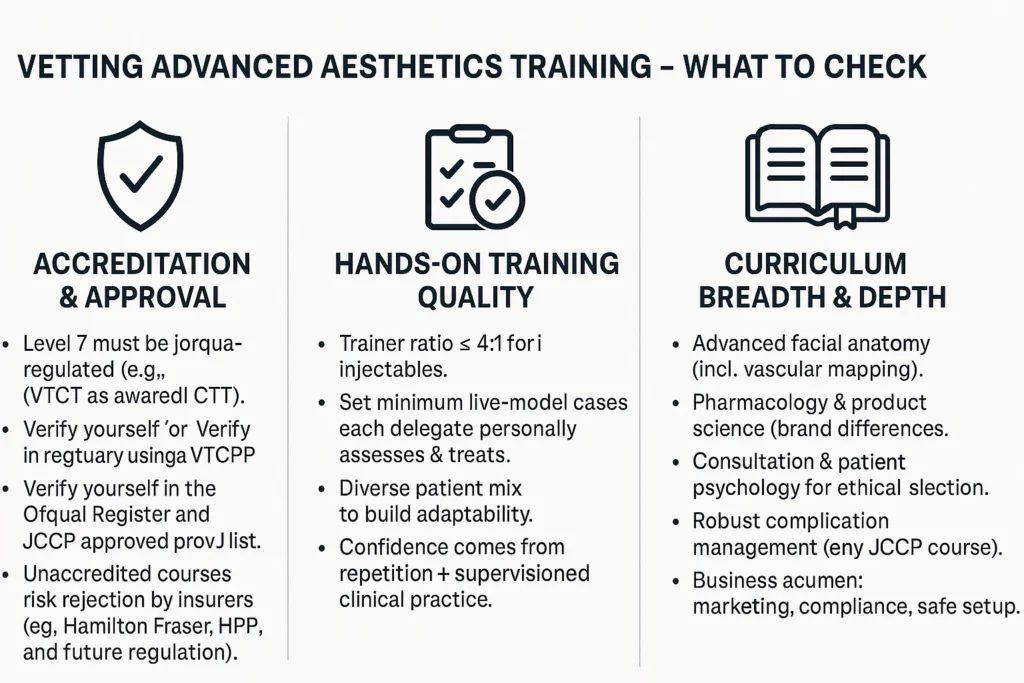
The Critical Questions: “Is your Level 7 Diploma an Ofqual-regulated qualification awarded by a recognised body like VTCT? Are you an officially listed JCCP accredited course UK provider?”
Pro-Tip: How to Verify: Do not rely solely on the provider’s website. Visit the official Ofqual Register of Regulated Qualifications and the JCCP register of approved providers to independently confirm their status.
Why It Is Non-Negotiable: An unaccredited course is a significant career risk. It may be worthless in the eyes of leading insurers like Hamilton Fraser, Cosmetic Insure, or HPPB, and will likely become obsolete as future government regulation is implemented.
Deconstructing the Curriculum – What Quality Training Looks Like
A provider’s credentials may be impeccable, but the course structure itself must be designed to build genuine competence. If your end goal is to achieve a recognised aesthetic qualification, every element of the syllabus should be scrutinised against national standards and industry expectations.
Scrutinise the Practical, Hands-On Training Component
This is where theory becomes a tangible skill. Vague promises are unacceptable.
The best aesthetic training provider UK standards dictate:
- A delegate-to-trainer ratio no higher than 4:1 for injectables.
- A set number of live model cases that each delegate must personally assess and treat.
- Exposure to a diverse patient demographic to build adaptability.
Why It Matters: Confidence is forged through repetition and supervised practice. You must leave a course having physically performed the procedures multiple times on real people, in a clinical environment, to be considered competent.
Evaluate the Breadth and Depth of the Course Content
A great course goes far beyond injection techniques.
Essential Curriculum Components:
- Advanced Facial Anatomy – including vascular mapping to reduce complication risk.
- Pharmacology and Product Science – understanding the differences between leading brands.
- Patient Consultation and Psychology – for ethical patient selection.
- Complication Management – a must-have in any JCCP accredited course UK syllabus.
- Business Acumen – marketing, compliance, and safe practice setup.
Beyond the Certificate – The Ecosystem of Long-Term Support
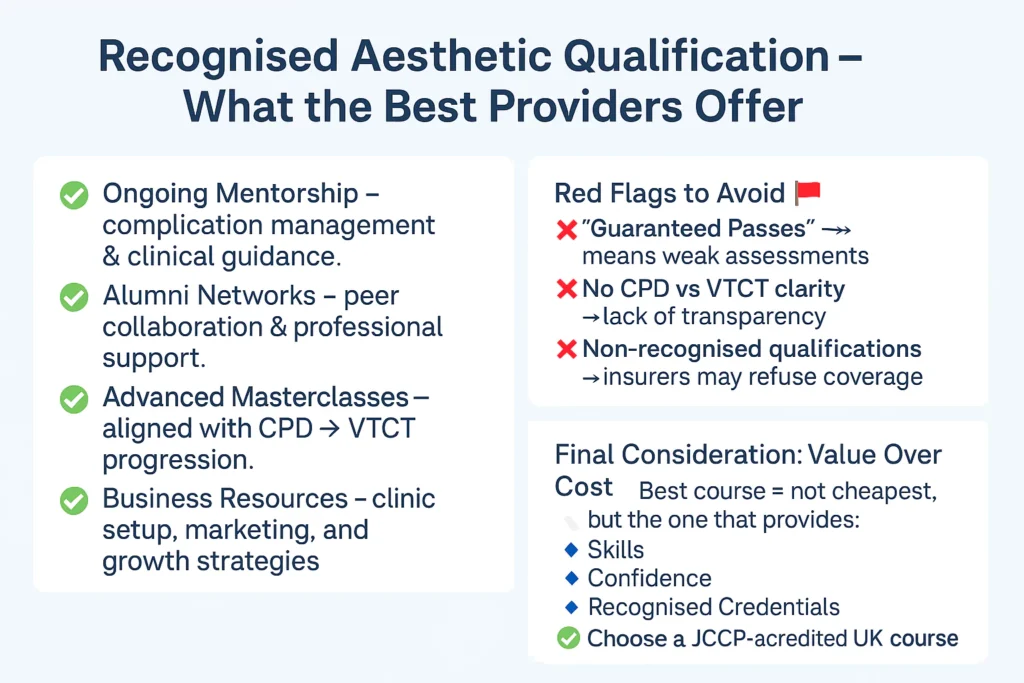
The best training providers see the course as the start of a professional journey. A true recognised aesthetic qualification comes with:
- Ongoing mentorship and complication management support.
- Alumni networks for peer collaboration.
- Access to advanced masterclasses that comply with CPD vs VTCT aesthetic training progression standards.
- Business resources to accelerate clinic growth.
Navigating the Pitfalls – Critical Red Flags to Avoid
When researching, remember:
- Providers offering “guaranteed passes” often skip rigorous assessment, a trait absent from any best aesthetic training providers UK.
- Lack of clear CPD vs VTCT aesthetic training distinction is a sign of poor transparency.
- If a provider’s qualification is not a recognised aesthetic qualification, insurers may refuse coverage.
The Final Consideration: Value Over Cost
The right course is not the cheapest; it’s the one that gives you the skills, confidence, and credentials to practise safely for years to come. Choosing a JCCP accredited course UK from a reputable provider ensures you meet both current and future regulatory standards while positioning yourself as a trusted professional in medical aesthetics.
By adopting this structured approach, you secure more than training; you secure a respected place in the aesthetics industry with a foundation built on patient safety, regulatory compliance, and clinical excellence.