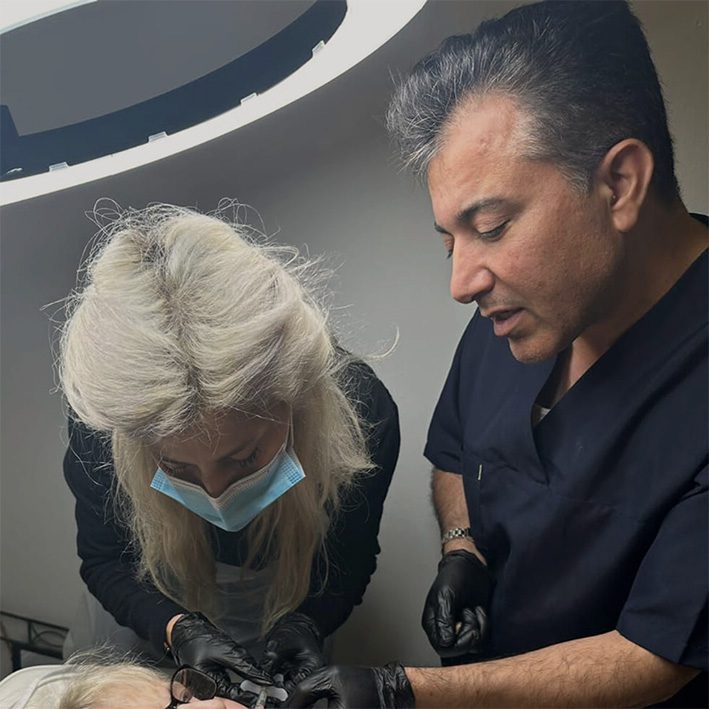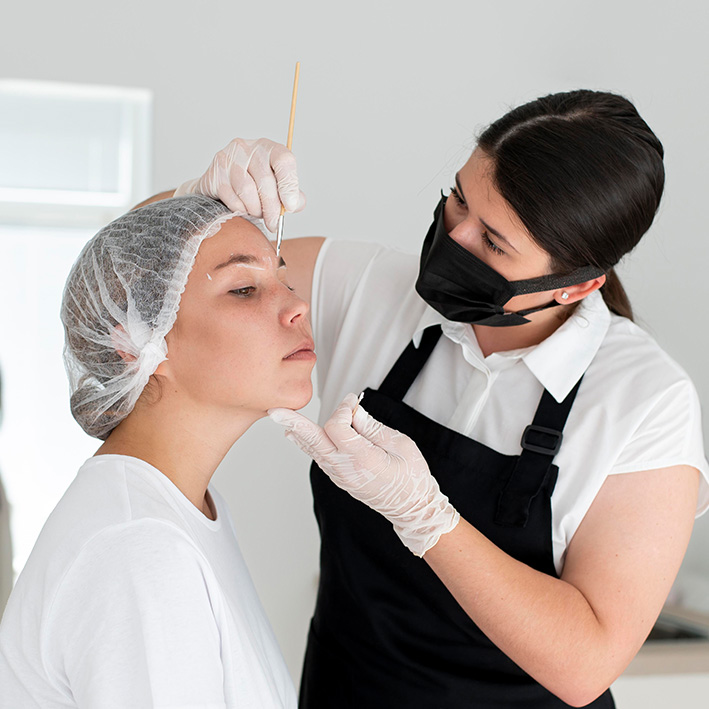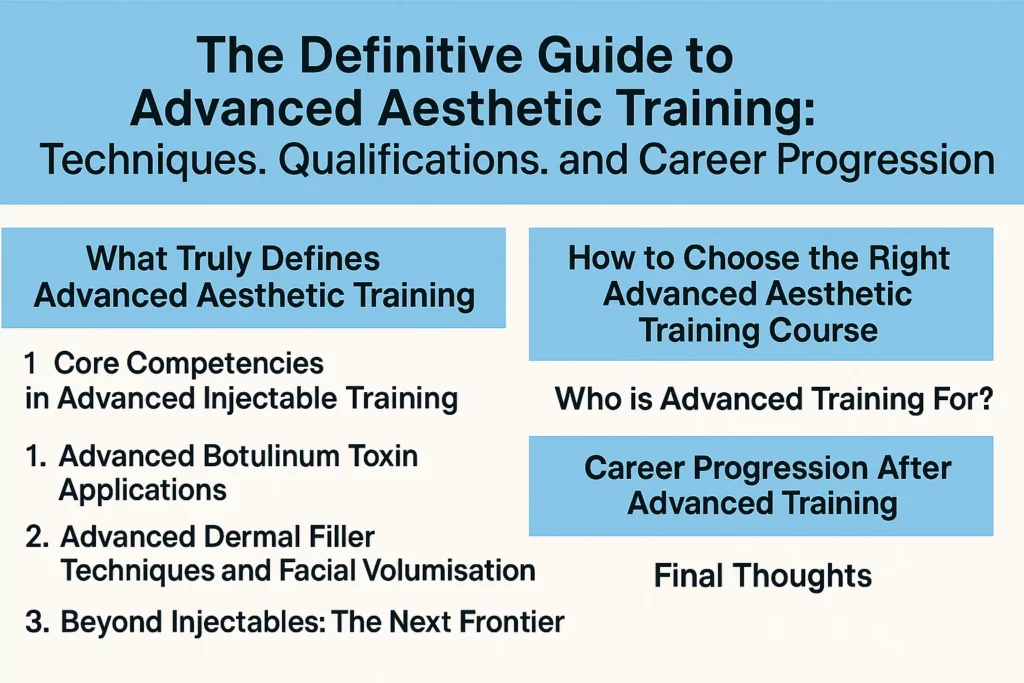
Transitioning from foundational knowledge to advanced practice is the most critical step in an aesthetic practitioner’s career. While foundation courses provide the essential license to operate, advanced dermal filler training and higher-level qualifications like the Level 7 aesthetics course UK cultivate true expertise, artistry, and the highest standards of patient safety. This guide delves into the core competencies of advanced training, explores the sophisticated procedures you will master, and outlines the qualifications that distinguish a competent injector from an industry leader.
Table of Contents
ToggleWhat Truly Defines Advanced Aesthetic Training?
Advanced aesthetic training is not merely an extension of basic courses; it is a fundamental shift in approach. It moves beyond treating simple, static lines to encompass a holistic understanding of facial anatomy, the ageing process, and dynamic rejuvenation. Key differentiators include:
- Comprehensive Anatomical Knowledge: Moving from basic muscle groups to a detailed understanding of facial fat pads, ligaments, vascular pathways, and the specific planes of injection (dermal, subcutaneous, supraperiosteal).
- Artistry and Facial Harmonisation: Developing an “aesthetic eye” to assess the full face, understanding how treating one area, such as the mid-face, can harmoniously impact others, like the tear troughs and jowls.
- Advanced Tools and Techniques: Mastering tools like microcannulas to minimise trauma and risk, and learning sophisticated injection techniques such as linear threading, fanning, and bolus injections for precise product placement.
- Complication Management: Gaining an in-depth, practical understanding of preventing, identifying, and managing adverse events, from common issues like bruising and swelling to severe complications like vascular occlusion and the use of Hyalase.
For practitioners aiming to meet the highest professional standards, choosing a JCCP approved aesthetic training programme ensures alignment with UK regulatory and safety frameworks.
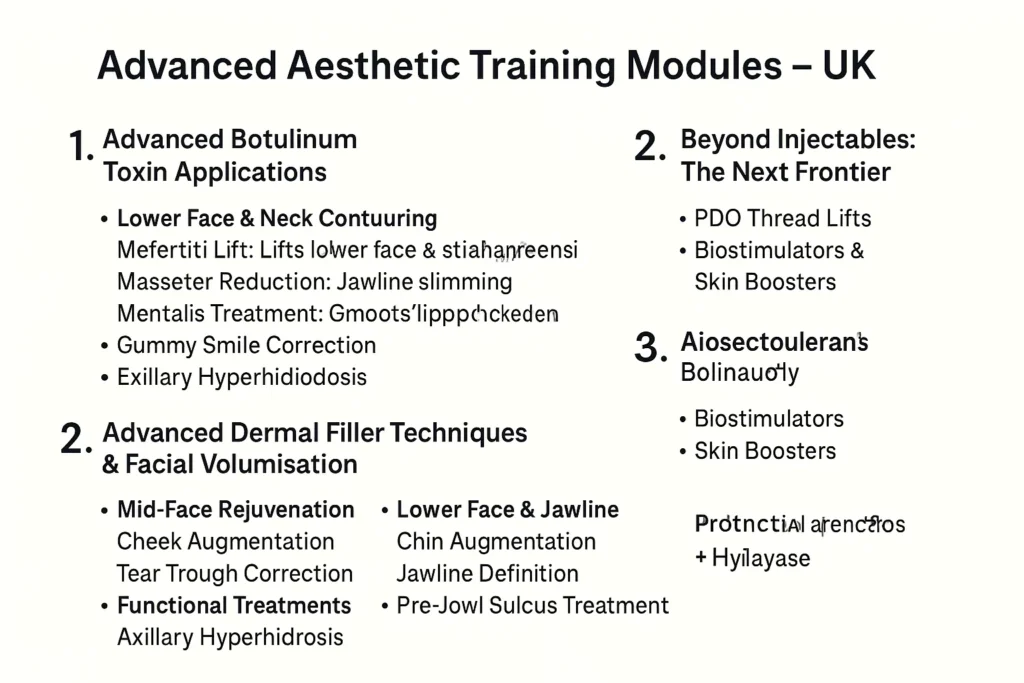
Core Competencies in Advanced Injectable Training
An accredited advanced course provides mastery over a wide array of sophisticated non-surgical procedures. Below are the essential techniques and knowledge areas that form the curriculum of a premier advanced training program.
1. Advanced Botulinum Toxin Applications
This module progresses beyond the upper face (forehead, glabellar complex, and crow’s feet) to address more complex and nuanced areas. Many providers also offer a masterclass in Botox UK for practitioners who want to perfect specific high-demand treatments.
Lower Face and Neck Contouring:
- Nefertiti Lift: Involves precise injections into the platysmal bands of the neck and along the jawline to create a sharper, more defined jaw and lift the lower face.
- Masseter Reduction (Jawline Slimming): Targets the masseter muscles to treat bruxism and create a slimmer, more heart-shaped appearance.
- Mentalis Treatment: Smooths a dimpled or puckered chin by relaxing the mentalis muscle.
- Gummy Smile Correction: Injection into the levator labii superioris alaeque nasi muscle to reduce excessive gingival display.
Perioral and Perinasal Treatments:
- “Bunny Lines”
- Lip Flip
Functional Treatments:
- Axillary Hyperhidrosis
2. Advanced Dermal Filler Techniques and Facial Volumisation
This is where artistry and anatomical precision converge. Advanced dermal filler training focuses on structural rejuvenation and contouring, primarily using a microcannula for enhanced safety.
Mid-Face Rejuvenation:
- Cheek Augmentation
- Tear Trough Correction
Lower Face and Jawline Contouring:
- Chin Augmentation
- Jawline Definition
- Pre-Jowl Sulcus Treatment
Advanced Perioral and Temple Treatments:
- Non-Surgical Rhinoplasty
- Temple Hollowing
3. Beyond Injectables: The Next Frontier
- PDO Thread Lifts
- Biostimulators & Skin Boosters
- Polynucleotides
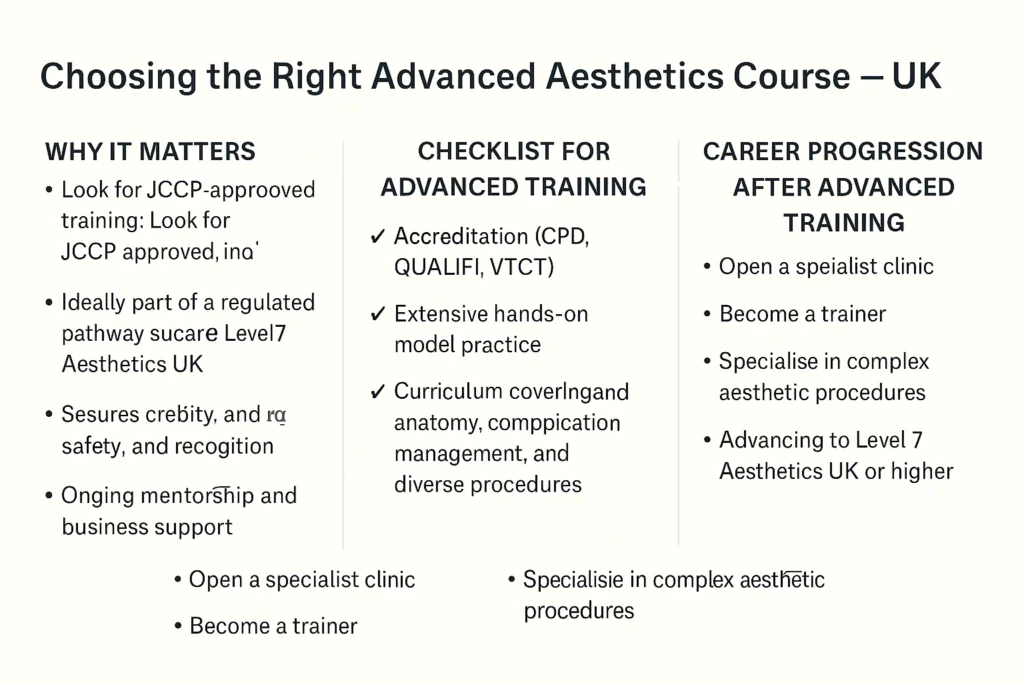
How to Choose the Right Advanced Aesthetic Training Course
When selecting an advanced course, ensure it is JCCP approved aesthetic training and, ideally, part of a regulated pathway such as the Level 7 aesthetics course UK. This ensures credibility, safety, and recognition across the industry.
Checklist:
- Accreditation (CPD, QUALIFI, VTCT)
- Extensive hands-on model work
- Small trainer-to-delegate ratios
- Curriculum covering advanced anatomy, complication management, and varied procedures
- Ongoing mentorship and business support
Who is Advanced Training For?
Licensed medical professionals who have completed a foundation course in Botulinum Toxin and Dermal Fillers, including:
- Doctors
- Dentists
- Nurses & Nurse Prescribers
- Pharmacist Prescribers
Career Progression After Advanced Training
Completing an advanced course or masterclass in Botox UK opens doors to:
- Running a specialist clinic
- Becoming a trainer
- Specialising in complex procedures
- Advancing to the Level 7 aesthetics course UK or higher qualifications
Final Thoughts
Advanced aesthetic training, particularly through JCCP approved aesthetic training programmes and recognised qualifications like the Level 7 aesthetics course UK, elevates your skills, safeguards your patients, and strengthens your career. Whether through broad advanced courses or targeted options like a masterclass in Botox UK, this is the step that transforms you from a capable injector to an industry leader.
Frequently Asked Questions (FAQs)
Q: Is an advanced course necessary if I’m already insured for basic procedures?
A: While you may be insured, advanced training is essential for patient safety, achieving superior results, and managing complications effectively. It is the hallmark of a practitioner committed to excellence and is increasingly expected by both patients and regulators.
Q: What is the difference between a masterclass and an advanced course?
A: The Difference between a masterclass and an advanced course is An advanced course typically covers a broad range of advanced techniques across the face. A masterclass usually focuses on perfecting a single, highly complex procedure, such as Tear Trough Correction or Non-Surgical Rhinoplasty.
Q: Will I be more employable after an advanced course?
A: Absolutely. Clinics are actively seeking practitioners with a demonstrable skill set in advanced, high-revenue treatments and a thorough understanding of complication management.