Table of Contents
ToggleAesthetic Courses in the UK – Learn, Practise, and Excel
How Aesthetic Courses Prepare You for a Career in the Industry?
The UK aesthetics sector has experienced remarkable growth over the past decade, driven by rising demand for non-surgical treatments such as dermal fillers, skin rejuvenation, and anti-wrinkle procedures. This expansion has created a competitive but opportunity-rich environment for qualified practitioners. For aspiring professionals, understanding this evolving landscape is crucial. Training providers often incorporate market insights into their courses, helping learners grasp industry trends, patient expectations, and emerging technologies.
A well-rounded understanding of the market goes beyond treatment techniques; it includes knowledge of patient demographics, seasonal trends, and the role of social media in influencing treatment choices. For example, practitioners who are aware of how consumer behaviour shifts in response to new beauty standards or wellness trends are better positioned to tailor their services. In addition, the ability to align clinical expertise with commercial awareness makes a practitioner more adaptable and resilient in a changing market.
Accredited aesthetic courses are designed to equip learners with the knowledge, technical skills, and professional standards needed to practise safely and effectively. Recognised qualifications, such as Level 7 Diplomas in Aesthetic Medicine or postgraduate certificates, ensure that practitioners meet the competency requirements set by industry bodies. These certifications demonstrate to clients and employers that you have undergone structured training in essential areas such as:
- Facial anatomy and physiology: Understanding the structural layers of the face to perform safe and precise treatments.
- Clinical governance and ethics: Upholding high standards of patient care, informed consent, and confidentiality.
- Treatment planning: Matching patient goals with the most appropriate procedures while managing expectations.
Completing accredited training also builds credibility. In an industry where trust and safety are paramount, patients are more likely to choose practitioners who hold formal qualifications from respected institutions. Furthermore, many insurance providers require evidence of recognised certification before offering coverage, making it a practical necessity for anyone starting out.
By combining in-depth theoretical knowledge with supervised hands-on practice, these qualifications not only prepare you to carry out treatments with confidence but also expand your professional opportunities, whether that’s establishing your own clinic, joining a medical aesthetics practice, or offering mobile services tailored to client needs.
How Can You Start Your Career Through Entry-Level Aesthetic Training?
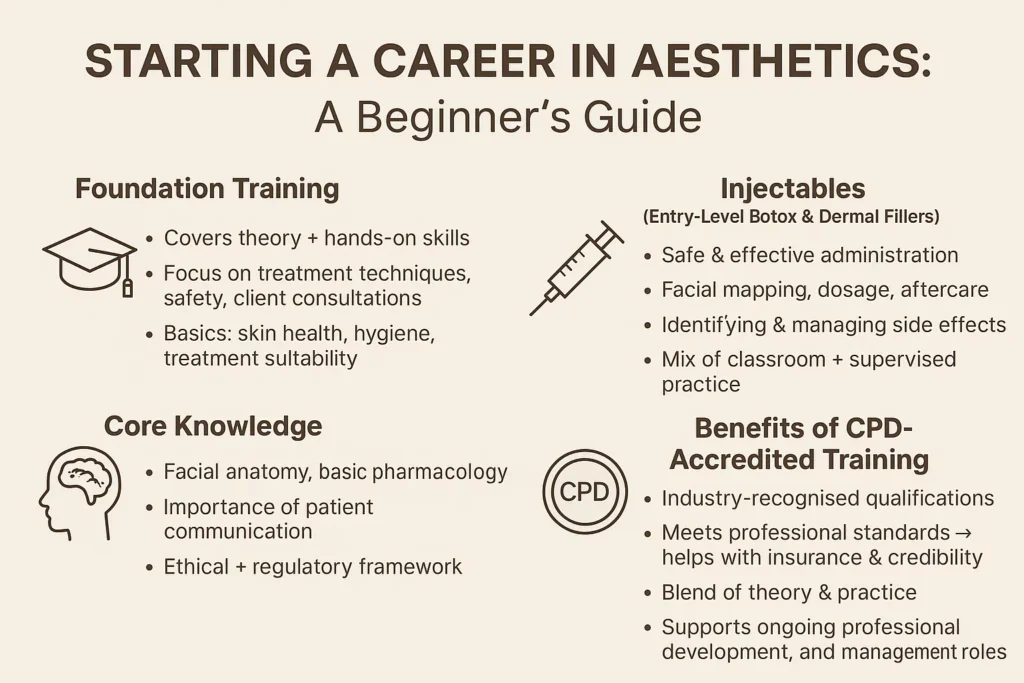
Starting a career in the aesthetics sector begins with establishing a solid foundation in both theory and hands-on skills. Introductory courses are designed to familiarise learners with essential treatment techniques, safety protocols, and client consultation processes. These beginner-friendly programmes typically cover skin health fundamentals, hygiene standards, and treatment suitability assessments, giving you the confidence to approach clients professionally.
Foundation training also introduces you to industry-relevant topics such as facial anatomy, basic pharmacology, and the role of patient communication in achieving positive treatment outcomes. Whether you aim to progress to advanced procedures or specialise in specific treatments, these early courses are your gateway to understanding how the aesthetics industry operates and how to work within its ethical and regulatory framework.
For those interested in injectables, entry-level Botox and dermal filler courses are often the first step. These programmes are tailored to teach safe and effective administration techniques, with a strong focus on facial mapping, dosage awareness, and aftercare guidance. Learners also explore how to identify and manage potential side effects, ensuring treatments are carried out with patient safety as the top priority.
These courses typically combine classroom-based learning with practical sessions under professional supervision, allowing you to develop precision, technique, and a steady hand. By mastering the fundamentals, you prepare yourself for more advanced injectables training, enabling you to expand your service offerings and adapt to a competitive marketplace where client trust and clinical accuracy are essential.
Choosing CPD-accredited (Continuing Professional Development) training ensures your qualifications are recognised across the industry. Accredited programmes verify that the curriculum meets established professional standards, which can be crucial for obtaining insurance and building client credibility.
CPD-accredited options often offer a blend of theory and practice, enabling you to progress at your own pace while maintaining high-quality learning outcomes. This accreditation also demonstrates your commitment to ongoing professional growth, a trait that clients value when choosing a practitioner. By completing CPD-approved courses, you not only meet industry expectations but also position yourself for future opportunities, such as advanced certifications, specialist treatments, or clinic management roles.
Quick Reference Table: Entry-Level Aesthetic Training Pathways
Training Area | What You’ll Learn | Key Benefits | Ideal For |
Foundation Courses | Skin anatomy, hygiene standards, consultation skills, and treatment suitability | Builds core knowledge, prepares you for advanced training | Beginners from medical or beauty backgrounds |
Botox & Dermal Fillers | Injection techniques, facial mapping, dosage control, aftercare, and complication management | Enables safe, effective injectable treatments, increases earning potential | Those aiming to offer cosmetic injectables |
CPD-Accredited Training | Curriculum meeting industry standards, recognised qualifications, and progression to advanced modules | Improves credibility, aids insurance applications, supports career growth | Practitioners seeking recognised certification |
What Advanced Aesthetic Skills and Specialisations Can You Master?
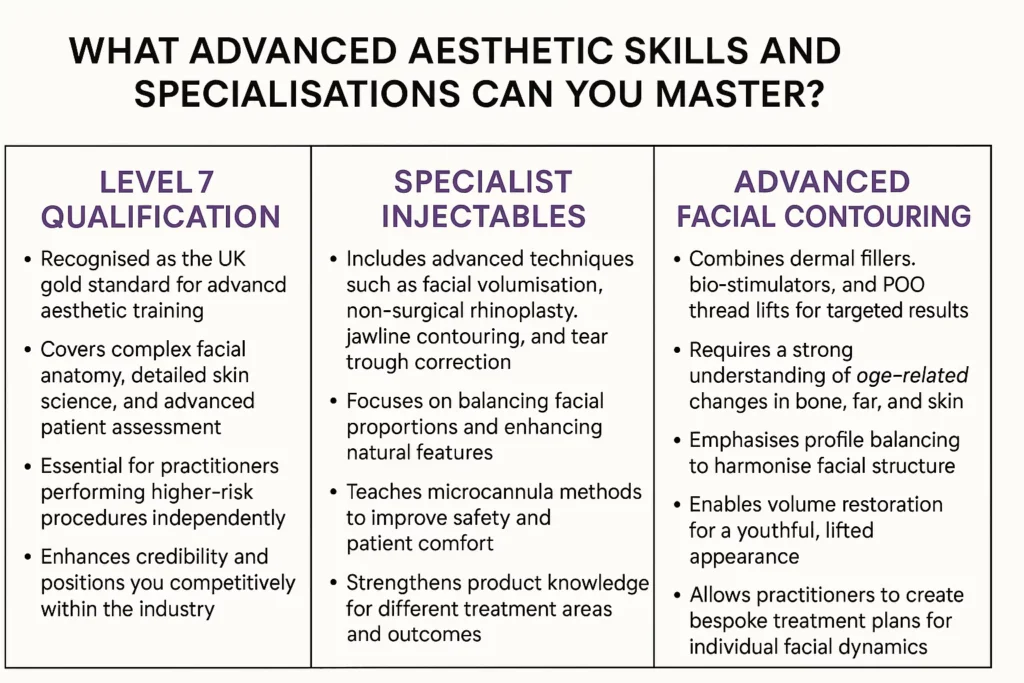
Advancing to a Level 7 qualification in aesthetic medicine signals that you have achieved a high standard of competence and knowledge in the field. This postgraduate-level training is aimed at practitioners who wish to expand beyond basic treatments into complex procedures while maintaining the highest safety and ethical standards.
- Recognised as the UK gold standard for advanced aesthetic training.
- Covers complex facial anatomy, detailed skin science, and advanced patient assessment.
- Essential for practitioners performing higher-risk procedures independently.
- Enhances credibility and positions you competitively within the industry.
- Builds both clinical precision and a deeper understanding of treatment planning.
Specialist injectable courses build upon basic Botox and dermal filler skills, enabling practitioners to perform a broader range of treatments with precision and artistry.
- Includes advanced techniques such as facial volumisation, non-surgical rhinoplasty, jawline contouring, and tear trough correction.
- Focuses on balancing facial proportions and enhancing natural features.
- Teaches microcannula methods to improve safety and patient comfort.
- Strengthens product knowledge for different treatment areas and outcomes.
- Equips you to meet demand for personalised anti-ageing solutions.
Advanced facial contouring involves reshaping and refining features without surgery, using injectable and non-surgical lifting techniques.
- Combines dermal fillers, bio-stimulators, and PDO thread lifts for targeted results.
- Requires a strong understanding of age-related changes in bone, fat, and skin.
- Emphasises profile balancing to harmonise facial structure.
- Enables volume restoration for a youthful, lifted appearance.
- Allows practitioners to create bespoke treatment plans for individual facial dynamics.
How Does Practical Learning with Live Models Improve Aesthetic Skills?
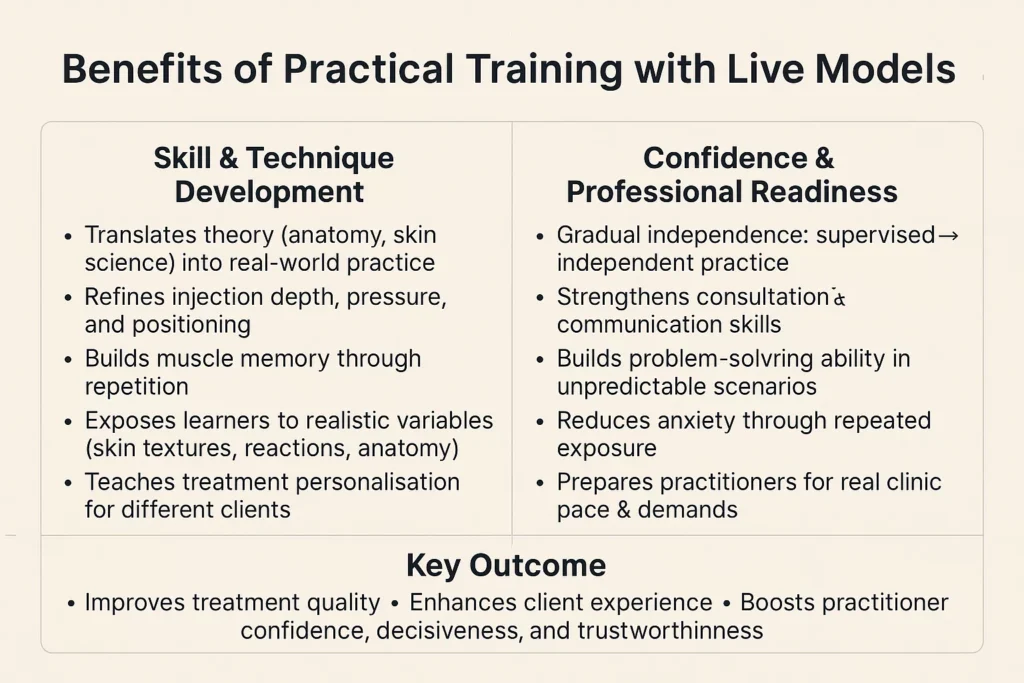
Practical training with live models bridges the gap between classroom theory and real-world application. It exposes learners to the subtleties of client treatment that cannot be fully replicated through textbooks or mannequins.
- Skill translation: Converts theoretical understanding of anatomy, skin science, and techniques into real, tactile application.
- Technique refinement: Allows practitioners to adjust injection depth, pressure, and positioning based on immediate feedback.
- Muscle memory development: Repetition on real skin builds the precision and efficiency needed for professional practice.
- Realistic scenarios: Introduces variables such as different skin textures, client reactions, and anatomical variations.
- Treatment personalisation: Teaches how to adapt methods to suit diverse client needs, from delicate facial areas to varied skin sensitivities.
By experiencing different skin types, facial structures, and patient responses, practitioners gain a practical awareness that theoretical training alone cannot offer. This adaptability is what separates a competent practitioner from an exceptional one.
Working directly with live models helps new practitioners overcome the hesitancy and uncertainty often felt when performing treatments for the first time.
- Gradual independence: Supervised sessions start with guided steps before progressing to independent execution, easing the learning curve.
- Communication skills: Encourages active consultation, listening to client concerns, and explaining procedures professionally and reassuringly.
- Managing unpredictability: Builds problem-solving skills when faced with unexpected client reactions or procedural adjustments.
- Reducing anxiety: Repeated exposure to real treatments minimises performance nerves and fosters a calm, professional approach.
- Professional readiness: Simulates the pace, pressure, and interpersonal demands of a clinic environment.
Confidence gained in live model training not only improves treatment quality but also enhances the overall client experience. A confident practitioner is more decisive, communicates with clarity, and inspires trust, all of which are crucial for building a successful aesthetic career.
What Are the Best Ways to Build a Career in Aesthetics?
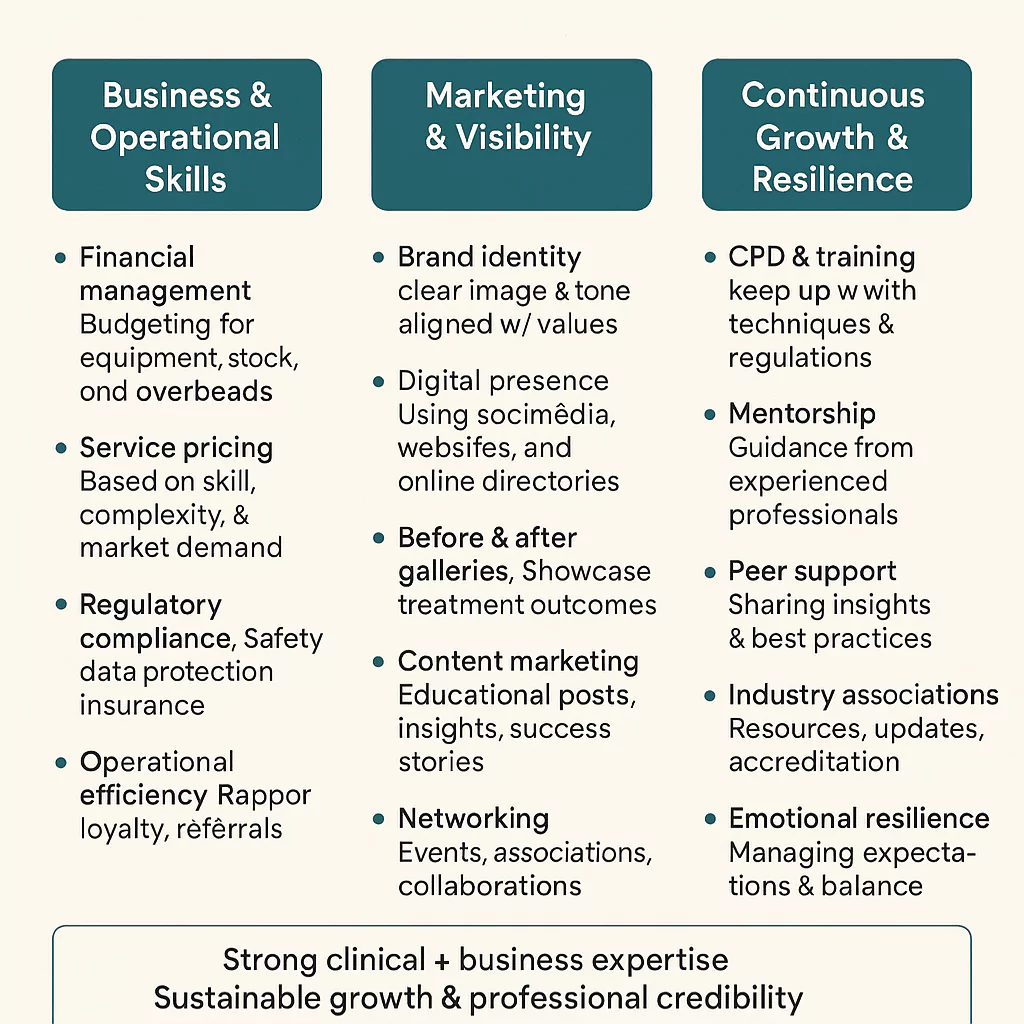
A successful career in aesthetics requires more than just clinical ability; strong business acumen is essential. Understanding how to operate within a commercial setting ensures you can manage finances, set competitive pricing, and comply with industry regulations.
- Financial management: Budgeting for equipment, product stock, and overheads while ensuring profitability.
- Service pricing: Setting fees that reflect skill level, treatment complexity, and market demand.
- Regulatory compliance: Adhering to UK standards for safety, data protection, and insurance.
- Operational efficiency: Scheduling appointments, managing stock, and ensuring smooth day-to-day workflow.
- Client relationship management: Building rapport to encourage repeat business and referrals.
These skills create a foundation for sustainable growth, whether you are running your own clinic, working within an established practice, or offering mobile aesthetic services.
In a competitive industry, visibility and reputation determine how quickly you attract clients. Strategic marketing and a strong professional portfolio help you stand out and build trust.
- Brand identity: Creating a clear image and tone that reflects your professional values and style.
- Digital presence: Using social media, websites, and online directories to showcase your expertise.
- Before-and-after galleries: Demonstrating treatment outcomes through high-quality images to inspire client confidence.
- Content marketing: Sharing educational posts, treatment insights, and success stories to position yourself as a trusted authority.
- Networking: Attending industry events, joining professional associations, and collaborating with related businesses.
A consistent and authentic marketing approach strengthens your personal brand and increases client engagement over time.
The aesthetics sector evolves quickly, with new treatments, technologies, and regulations emerging regularly. Continuous learning and professional networking keep you relevant and competitive.
- CPD and training updates: Staying current with techniques, safety protocols, and innovations.
- Mentorship: Gaining guidance from experienced practitioners to refine skills and navigate challenges.
- Peer support networks: Sharing insights and best practices with other professionals.
- Industry associations: Accessing resources, legal updates, and accreditation opportunities.
- Emotional resilience: Managing client expectations and maintaining work-life balance in a high-demand profession.
By combining advanced technical expertise with solid business skills, strategic marketing, and consistent professional development, you can build a thriving and sustainable career in aesthetics.
How Do You Choose the Right Aesthetic Training Provider in the UK?
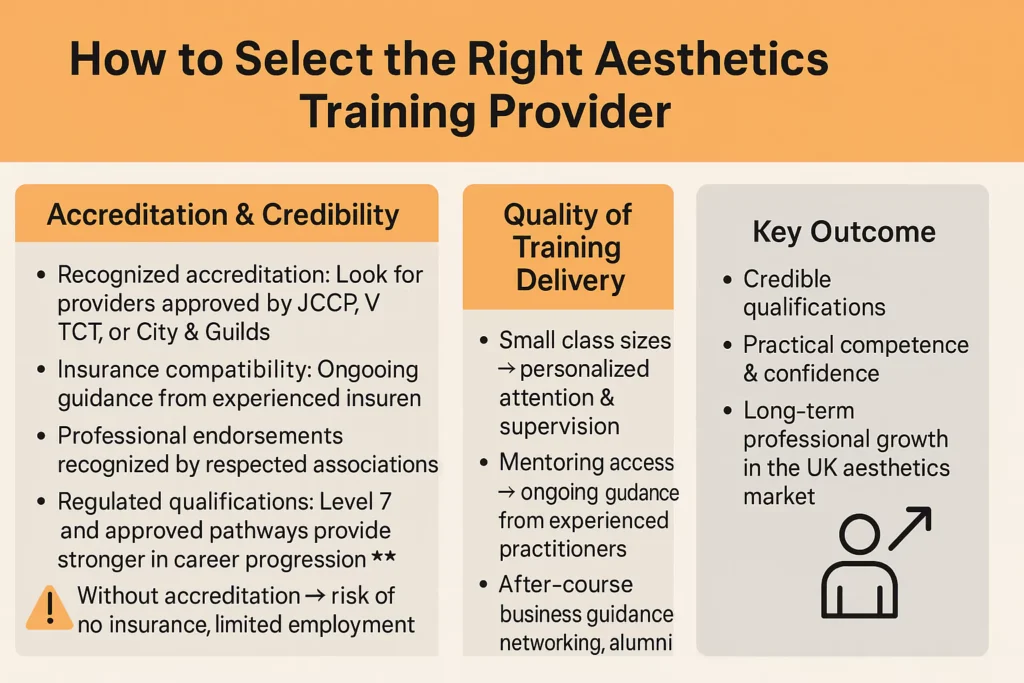
Selecting the right training provider starts with confirming their credibility. Accreditation ensures that the course content, teaching standards, and assessment methods meet industry expectations and regulatory requirements.
- Recognised accreditations: Look for providers approved by bodies such as the Joint Council for Cosmetic Practitioners (JCCP), Ofqual, VTCT, or City & Guilds. These indicate the training aligns with National Occupational Standards.
- Insurance compatibility: Ensure that the qualification you gain will be accepted by major insurance companies, as this directly affects your ability to practise.
- Professional endorsements: Check whether the provider is recognised or recommended by respected industry associations, as this often reflects their standing in the aesthetics community.
- Regulated qualifications: Level 7 (degree-level) and other regulated pathways provide a stronger foundation for both compliance and career progression.
A course without recognised accreditation may limit your ability to obtain insurance, gain employment, or meet local licensing requirements, making this the most critical factor in your decision.
Beyond the qualification itself, the way training is delivered has a direct impact on your competence and confidence.
- Small class sizes: More personalised attention, better supervision during practical sessions, and greater opportunity for feedback.
- Mentoring access: Ongoing guidance from experienced practitioners helps bridge the gap between training and real-world practice.
- Practical emphasis: Courses should offer substantial live model work to build skill and confidence before qualification.
- After-course support: Providers who offer refresher sessions, CPD opportunities, or a direct line to tutors after graduation help you maintain and improve your skills.
- Career development assistance: Some providers also offer business start-up guidance, networking opportunities, or access to alumni groups to help you establish your place in the industry.
A provider that invests in your professional growth even after you leave the classroom is more likely to set you up for long-term success in the competitive UK aesthetics market.