In the booming UK aesthetics industry, clinical proficiency is the price of entry, but it is not the key to success. The most respected and profitable practitioners are not just masters of the syringe; they are astute entrepreneurs who command a distinct set of business skills. While artistry creates beautiful results, business acumen builds a thriving, reputable, and sustainable enterprise.
Transitioning from a skilled clinician to a successful business owner requires a deliberate shift in mindset and a mastery of new competencies. This guide provides a comprehensive roadmap, covering the four essential pillars of business for every aesthetic practitioner: Financial & Structural Foundations, Regulatory & Legal Compliance, Strategic Marketing & Brand Building, and Operational & Patient Excellence. Whether you’re seeking aesthetic business training UK or planning your first clinic launch, these pillars will guide you.
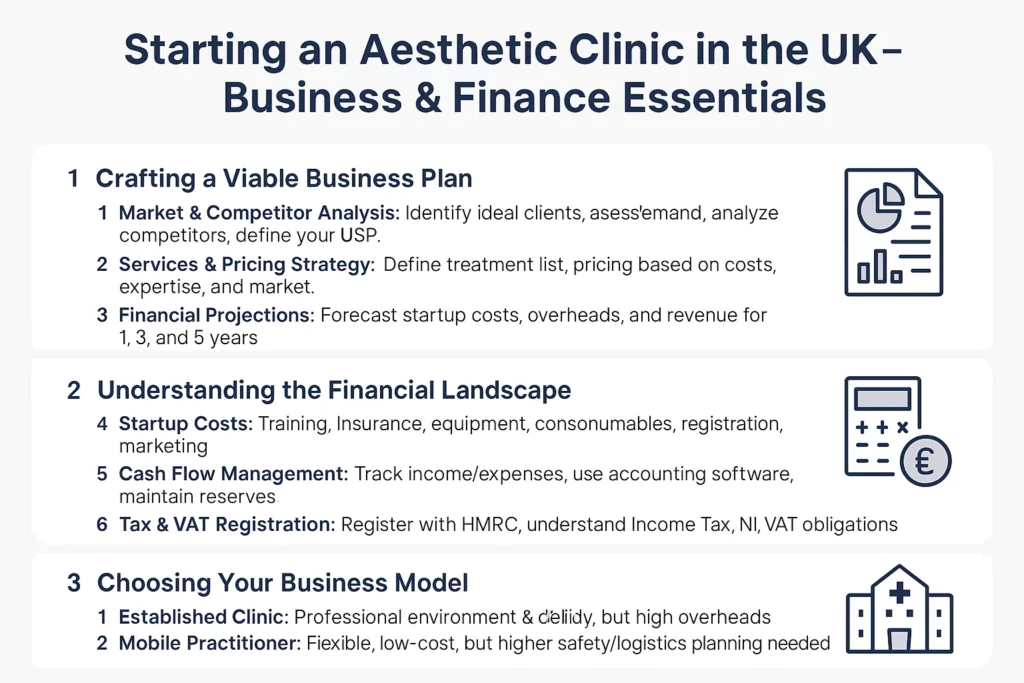
Table of Contents
ToggleFoundational Business & Financial Acumen
Before the first treatment is administered, the groundwork for a successful business must be laid. This foundation is built on strategic planning and a robust understanding of your finances, essential knowledge for anyone exploring how to start an aesthetic clinic UK.
Crafting a Viable Business Plan
A business plan is your strategic blueprint. It is not merely a document for securing a loan; it is an essential tool for defining your vision and navigating your growth.
- Market & Competitor Analysis: Who is your ideal client? What services are in demand in your area? Analyse your competitors’ pricing, services, and marketing to identify your Unique Selling Proposition (USP). Will you be the go-to clinic for natural-looking enhancements, a specialist in regenerative treatments, or the most accessible mobile provider?
- Services & Pricing Strategy: Clearly define the treatments you will offer. Your pricing model must be strategic, considering factors such as product costs, your time, competitor rates, and the perceived value of your expertise.
- Financial Projections: Detail your startup costs (training, insurance, equipment, legal fees), ongoing overheads, and realistic revenue forecasts for the first one, three, and five years.
Understanding the Financial Landscape
Profitability is intentional. It requires diligent management of all financial aspects of your practice.
- Startup Costs: Be comprehensive. This includes initial training, medical malpractice insurance, specialised equipment (from needles to lasers), consumables, business registration fees, and a marketing launch budget.
- Managing Cash Flow: This is the lifeblood of your business. Track your income and expenses meticulously. Use accounting software to monitor your financial health and ensure you always have enough capital to cover your operational costs.
- Tax & VAT Registration: As a self-employed practitioner or limited company director, you must register with HMRC. It is crucial to understand your obligations regarding Income Tax, National Insurance, and when you are required to register for VAT. Seeking advice from an accountant who specialises in the medical sector can be an invaluable investment.
Choosing Your Business Model
The structure of your practice will fundamentally impact your overheads, lifestyle, and brand perception.
- The Established Clinic: A physical premises offers credibility and a controlled clinical environment but comes with high fixed costs like rent, utilities, and business rates.
- The Mobile Practitioner Model: This offers flexibility and significantly lower overheads. However, it requires meticulous planning for safety, logistics, and clinical waste management. As noted by bodies like the JCCP, maintaining clinical standards in a non-clinical environment presents significant challenges that must be addressed through rigorous risk assessments.
- The Room Rental Model: Renting a room within an established salon, spa, or clinic offers a hybrid solution, providing a professional setting without the long-term commitment of a full lease.
Navigating the UK’s Regulatory & Legal Framework
The aesthetics industry in the UK is navigating a period of significant regulatory change. Operating a legally compliant and insurable practice is a non-negotiable business skill.
Qualifications: The Bedrock of Credibility
Your qualifications are the foundation of patient trust and your eligibility for insurance.
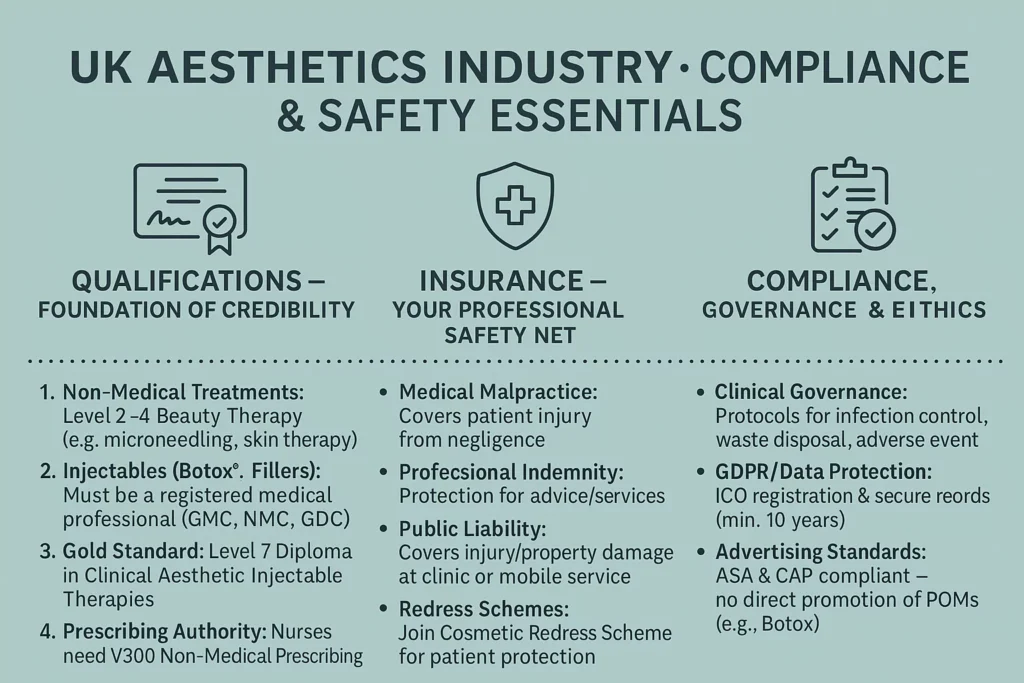
- Non-Medical Treatments: For services like microneedling or advanced skin therapies, Level 2, 3, and ideally Level 4 beauty therapy qualifications are the industry standard.
- Medical Aesthetics (Injectables): To administer treatments like Botulinum Toxin and Dermal Fillers, you must be a registered medical professional with a valid registration number from the GMC, NMC, or GDC.
The Gold Standard Qualification: The Level 7 Diploma in Clinical Aesthetic Injectable Therapies is widely recognised by leading bodies like HEE and the JCCP as the benchmark for competence in cosmetic injectables.
The Authority to Prescribe: To independently prescribe Botulinum Toxin, registered nurses must complete the V300 Non-Medical Prescribing course. Without this, you must work with a qualified prescriber, adding a layer of complexity to your business operations.
Insurance: Your Professional Safety Net
Comprehensive insurance is vital to protect you from the financial and reputational damage of a potential claim.
- Medical Malpractice Insurance: Covers claims arising from clinical negligence that results in patient injury.
- Professional Indemnity Insurance: Protects against claims of professional negligence related to your advice or services.
- Public Liability Insurance: Covers claims of injury to a person or damage to their property at your practice premises or in a client’s home.
Compliance, Governance, and Ethics
- Clinical and Corporate Governance: Implement robust protocols for clinical waste disposal, infection control, and adverse event handling.
- Data Protection (GDPR): Register with the ICO and securely store patient records for at least 10 years.
- Advertising Standards: Ensure marketing materials meet ASA and CAP guidelines, avoiding direct promotion of prescription-only medicines like Botox.
- Redress Schemes: Join a government-authorised consumer redress scheme such as the Cosmetic Redress Scheme.
The Art of Marketing & Building Your Brand
Excellent clinical results are your best marketing tool, but they need amplification through marketing for aesthetic practitioners that is targeted, strategic, and compliant.
Defining Your Brand Identity
Your brand is your promise to your clients. It should be consistent across every touchpoint.
- Identify Your Niche: Are you an expert in subtle rejuvenation, facial contouring, or treating a specific demographic?
- Develop a Professional Image: Use a professional logo, colour palette, and brand voice that reflects your values and expertise.
Building a Powerful Online Presence
Your digital footprint is your modern-day clinic window.
- Your Website: Your most critical marketing asset, with clear service descriptions, transparent pricing, and educational blog content.
- Social Media: Instagram and Facebook can showcase results (with consent) and share educational posts, all while maintaining compliance.
Client Acquisition & Retention
Reputation Management: Gather testimonials, manage reviews, and respond professionally to feedback.
Loyalty and Referrals: Develop structured loyalty programs and a referral system to boost client retention in aesthetics and encourage repeat visits.
Mastering Patient Experience & Operations
The long-term success of your business depends on daily operational excellence and patient satisfaction.
The Art of the Consultation
- Conduct thorough assessments beyond the consent form.
- Manage expectations clearly and transparently.
- Know when to say “no” to protect your integrity.
Streamlining Operations with Technology
Use clinic management software like Pabau for appointment booking, digital consent forms, patient records, and marketing automation.
Building Your Support Network
- Join professional organisations like BAMAN or BCAM.
- Commit to lifelong learning with CPD in both clinical skills and business management.
Personal Safety for the Mobile Practitioner
- Share your schedule with a trusted contact.
- Risk assess environments before starting treatments.
- Trust your instincts for safety.
Conclusion: The Dual Pillars of Success
Building a successful aesthetic practice demands both clinical expertise and entrepreneurial skill. By mastering finance, compliance, marketing, and operations, and by embracing aesthetic business training UK, you can transform your passion for aesthetics into a thriving business.