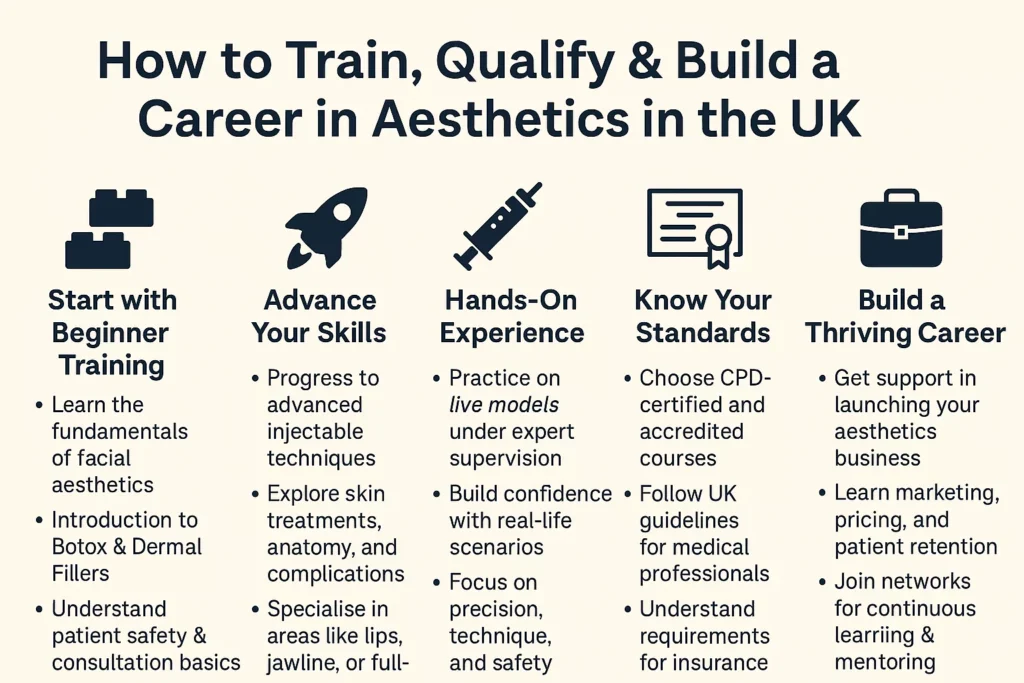
The aesthetics industry in the UK is expanding rapidly, offering diverse opportunities for practitioners who combine clinical expertise with business savvy and client care. From mastering beginner-level injectables to achieving advanced specialist skills, success in this competitive field depends on structured training, recognised qualifications, and a strong professional presence. Whether your goal is to become a certified aesthetic injector, grow an established beauty practice, or launch your own clinic, understanding the training pathways, accreditation standards, and business strategies is essential.
A career in aesthetics demands more than technical ability; it requires adherence to safety protocols, commitment to continuous professional development, and the ability to build trust with clients through transparent communication and high-quality results. Training options range from CPD-accredited beginner courses to postgraduate-level qualifications like the Level 7 Diploma in Aesthetic Medicine, ensuring practitioners are equipped to meet both industry expectations and emerging regulatory requirements.
This guide takes you through every stage of the journey: from beginner aesthetic training and advanced dermal filler techniques to injectables practical experience, accreditation frameworks, and strategies for building a thriving aesthetics business in the UK. By combining skill, professionalism, and strategic marketing, you can establish a respected presence in the market and create a career that is both rewarding and sustainable.
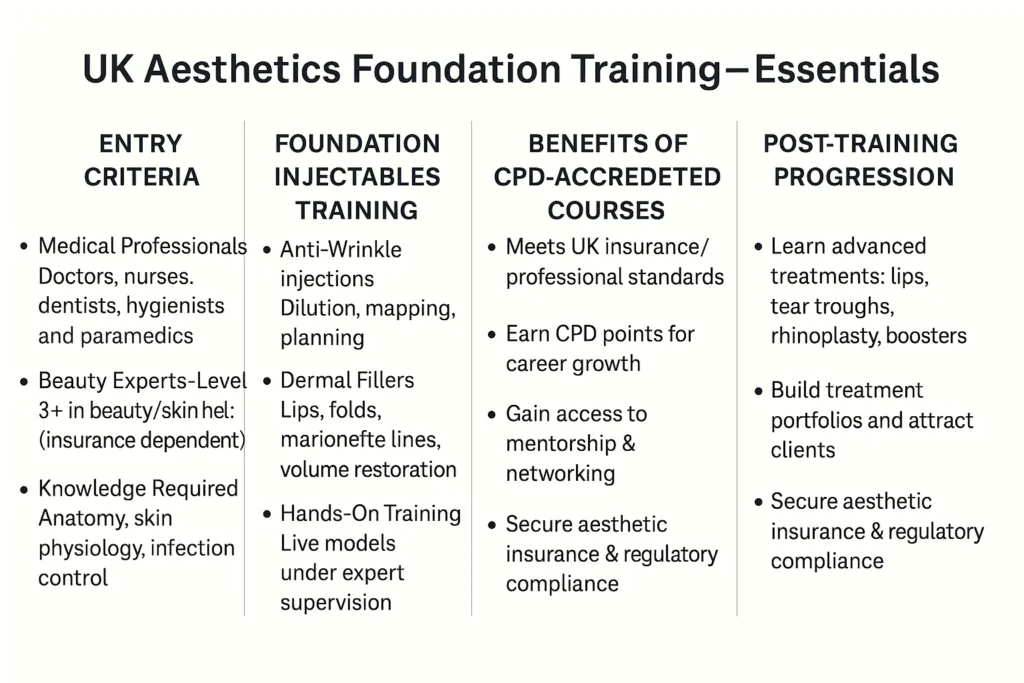
Table of Contents
ToggleWhat Does Beginner Aesthetic Training in the UK Involve?
Starting in the UK aesthetics industry means building a strong foundation in both theory and practice. Beginner training courses are designed to equip new practitioners with the essential skills, clinical knowledge, and safety protocols required to deliver non-surgical cosmetic treatments. Whether you aim to become a qualified aesthetic injector or to expand an existing beauty business, this early stage is crucial for career progression.
Most reputable aesthetic training providers set minimum entry criteria to ensure safety and competency:
- Medical background: Doctors, nurses, dentists, dental hygienists, and paramedics are widely accepted.
- Beauty professionals: Those with Level 3 or above in beauty therapy, skin health, or equivalent qualifications may be eligible, subject to insurance requirements.
- Foundational knowledge: Understanding of facial anatomy, skin physiology, and infection control protocols is expected.
- Regulatory compliance: Awareness of UK aesthetic practice guidelines, consent laws, and client safeguarding procedures.
This vetting process ensures that all learners can meet patient safety standards and understand the medical and ethical framework of aesthetic practice.
Foundation-level injectables training is the cornerstone of aesthetic education in the UK. It introduces core skills in:
- Anti-wrinkle injections (commonly referred to as Botox) learning dilution ratios, injection mapping, and treatment planning.
- Dermal fillers such as hyaluronic acid fillers for lips, nasolabial folds, marionette lines, and volume restoration.
- Patient assessment identifying treatment suitability, contraindications, and managing expectations.
- Safe practice, correct storage, aseptic technique, sharps disposal, and complication management.
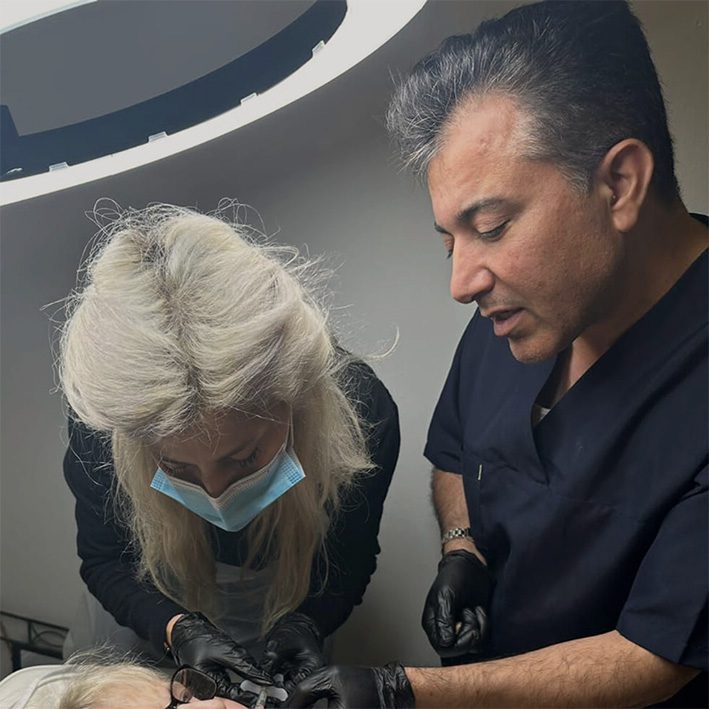
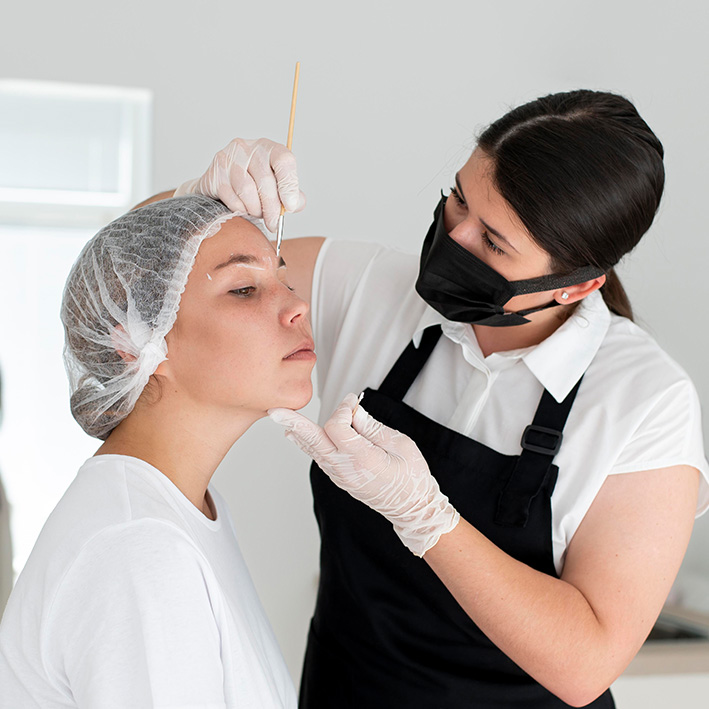
Hands-on training with live models under expert supervision ensures trainees develop confidence in injection techniques while understanding the artistry of facial aesthetics.
Choosing a CPD-accredited aesthetic course provides credibility and assurance that the training meets recognised industry benchmarks. Key benefits include:
- Meeting insurance requirements for practice in the UK.
- Gaining CPD points to demonstrate professional development.
- Access to networking opportunities with established practitioners.
- Ongoing support and mentorship from training providers.
Accreditation also reassures clients that you have been trained to a professional standard in line with UK clinical practice guidelines.
Once foundation training is complete, practitioners can:
- Advance to specialist procedures such as lip augmentation, tear trough filler, non-surgical rhinoplasty, and skin booster treatments.
- Build a treatment portfolio to attract clients and strengthen marketing credibility.
- Secure appropriate aesthetic insurance and ensure compliance with CQC and local authority standards where applicable.
- Develop business skills for clinic management, pricing strategies, and client retention.
Success in the UK aesthetic industry comes from blending technical expertise, client trust, and continuous learning, ensuring your services remain safe, ethical, and in demand.
How Can You Develop Advanced and Specialist Aesthetic Skills?
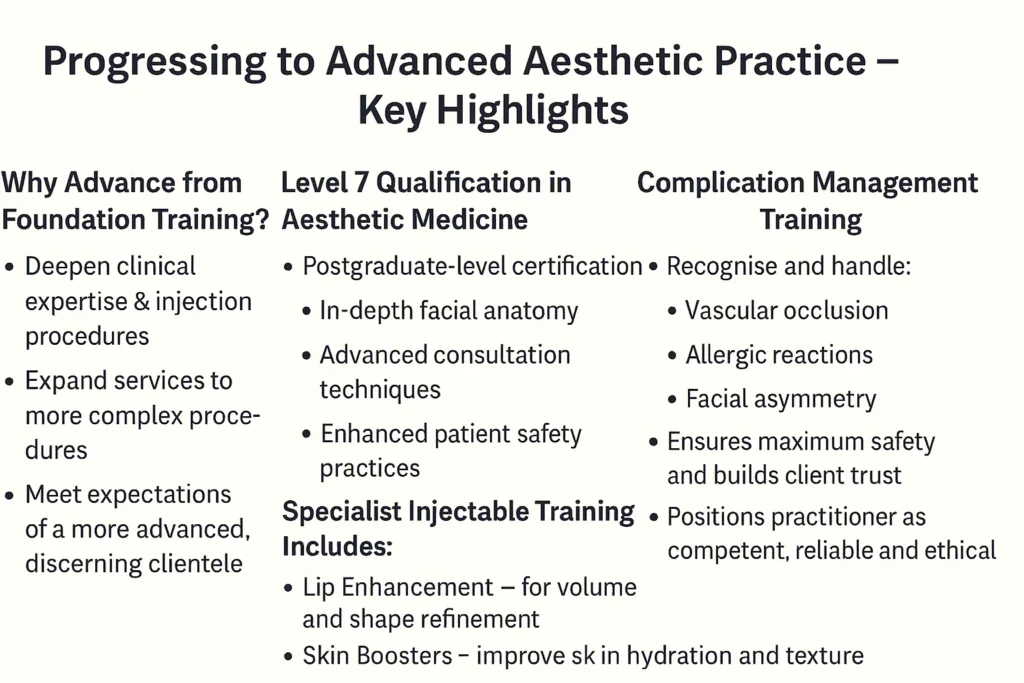
Progressing from beginner-level aesthetic training to advanced practice involves deepening clinical expertise, refining injection artistry, and broadening the scope of treatments offered. Practitioners who invest in higher-level qualifications and specialist training are better equipped to deliver complex procedures safely while meeting the expectations of a more discerning client base.
Many choose to move from foundation certification to a regulated Level 7 qualification in aesthetic medicine. This postgraduate-level credential demonstrates advanced competency in both theoretical knowledge and practical application, covering topics such as in-depth facial anatomy, advanced consultation methods, and enhanced patient safety protocols. Achieving this level not only boosts credibility but also aligns with the UK’s evolving regulatory landscape for non-surgical cosmetic procedures.
Advanced dermal filler & facial contouring techniques
Treatment Area | Purpose | Expected Outcome | Common Product Type |
Cheek Augmentation | Restore mid-face volume, lift sagging skin | Enhanced cheek definition and youthful contour | Hyaluronic acid-based filler |
Jawline Definition | Create a sharper, more structured lower face profile | Improved jawline symmetry and firmness | High-viscosity dermal filler |
Chin Enhancement | Balance facial proportions and improve the side profile | More harmonious facial structure and refined profile line | Hyaluronic acid or collagen stimulator |
Temple Filler | Address hollowing for overall facial rejuvenation | Softer transition between the forehead and the eyes | Soft hyaluronic acid filler |
Tear Trough Correction | Reduce under-eye hollowness and dark shadows | Brighter, refreshed under-eye area | Low-viscosity hyaluronic filler |
Specialist injectable training expands treatment options beyond standard wrinkle reduction and basic filler applications. Popular procedures include lip enhancement for volume and shape refinement, skin boosters to improve hydration and texture, and collagen-stimulating injectables for long-term rejuvenation. These services are increasingly in demand among clients seeking subtle yet impactful results without invasive surgery.
Equally important is formal training in complication management. Advanced practitioners must be confident in recognising and addressing adverse events such as vascular occlusion, allergic reactions, or asymmetry. This expertise reinforces patient trust and ensures treatments are delivered with the highest safety standards, positioning the practitioner as a reliable and responsible professional in the UK aesthetics industry.
What Should You Expect from Injectables Training and Practical Experience?
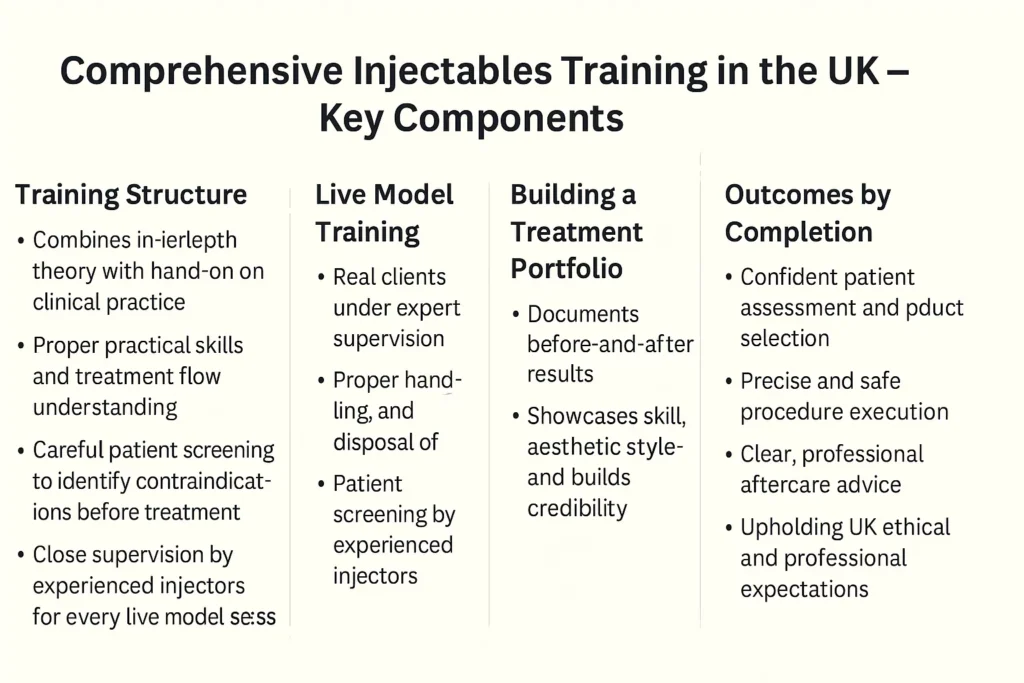
Comprehensive injectables training in the UK blends detailed theoretical learning with structured hands-on experience to prepare practitioners for safe and effective clinical work. This combination ensures that, whether delivering Botox treatments or dermal filler procedures, you develop both technical precision and patient-focused care.
Live model training is a cornerstone of quality injectables courses. Working on real clients under close supervision allows you to experience how facial anatomy responds in practice, refine your injection techniques, and build a natural understanding of treatment flow. It also strengthens your ability to communicate with patients, manage expectations, and create results that look balanced and harmonious. Training providers that keep groups small often offer the best learning experience, as this enables personalised feedback and more practical time per delegate.
Safety protocols and supervision standards in quality injectables training usually include:
- Strict adherence to hygiene and aseptic techniques throughout all procedures.
- Proper handling, preparation, and disposal of sharps to minimise risk.
- Careful patient screening to identify contraindications before treatment.
- Close supervision by experienced medical injectors for every live model session.
- Immediate guidance on managing potential complications such as swelling, asymmetry, or vascular occlusion.
- Following recognised UK industry guidelines and ethical practice standards.
A good training programme also helps you start building your treatment portfolio during the course. Documenting before-and-after results from supervised treatments is an effective way to showcase your work to potential clients or employers. This portfolio reflects both your growing competence and your developing aesthetic style, giving you a valuable marketing tool as you move forward in your career.
By the end of such training, you should be confident in assessing patients, selecting the right products, performing procedures to a high standard, and providing clear aftercare advice, all while maintaining the professional and ethical standards expected within the UK aesthetics industry.
What Accreditation and Qualification Standards Apply to Aesthetic Training?
While the UK currently has no mandatory legal requirement for specific qualifications in aesthetic medicine, the industry is moving towards stronger regulation, making recognised accreditation and formal qualifications increasingly valuable. These credentials signal professional competence, enhance patient trust, and often determine eligibility for insurance coverage, all crucial elements for a sustainable and ethical aesthetics career.
Understanding the main UK accreditation frameworks is essential. CPD (Continuing Professional Development) accreditation is widely offered by training providers, helping practitioners evidence ongoing learning and stay current with new techniques, safety protocols, and treatment trends. VTCT qualifications, recognised within the beauty and aesthetics sector, offer structured pathways that combine theoretical learning with practical skills. Ofqual (Office of Qualifications and Examinations Regulation) oversees the quality and validity of regulated qualifications in England, ensuring they meet nationally recognised standards. JCCP (Joint Council for Cosmetic Practitioners) acts as a professional register, setting competency benchmarks for practitioners and training providers in the cosmetic sector.
The importance of recognised qualifications in aesthetics goes beyond formality. They provide proof of clinical skill and safety awareness, reassure clients that treatments are carried out to industry standards, and are often a prerequisite for specialist insurance policies. In an industry where trust is central, holding a credible qualification can be a decisive factor for patient choice.
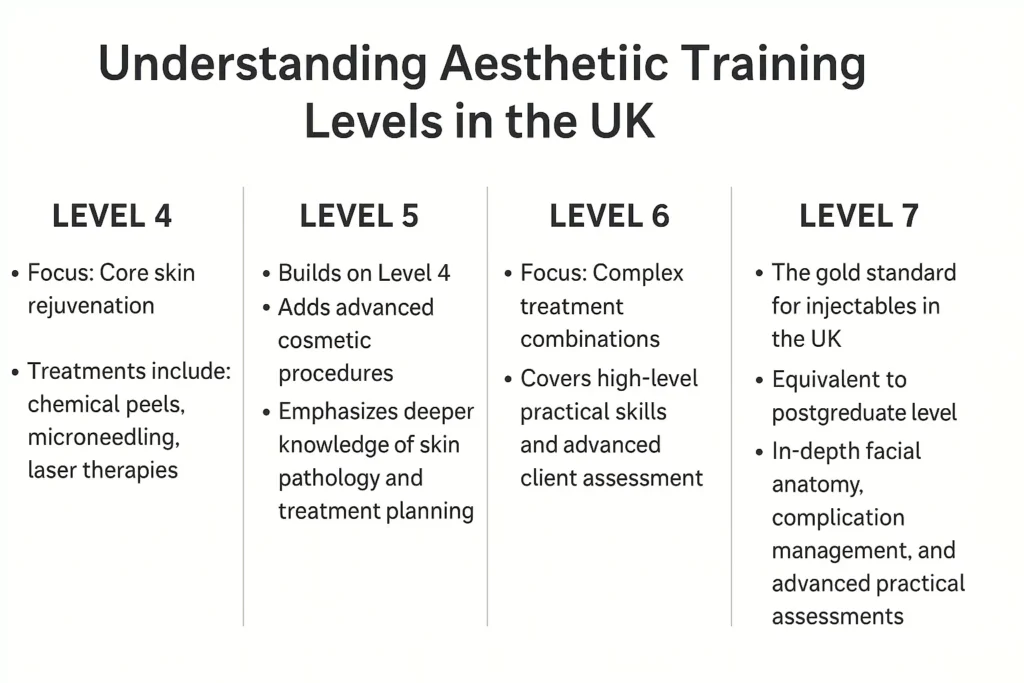
Courses are often categorised by Level 4, 5, 6, and 7 standards:
- Level 4: Focuses on core skin rejuvenation treatments such as chemical peels, micro-needling, and laser therapies.
- Level 5: Expands into more advanced skin and cosmetic procedures, often incorporating a deeper understanding of skin pathology and treatment planning.
- Level 6: Covers higher-level practical skills, complex treatment combinations, and advanced client assessment.
- Level 7: Considered the gold standard for injectables in the UK, equivalent to postgraduate study, with a strong emphasis on in-depth facial anatomy, complication management, and high-level practical assessment.
As regulatory pressure builds, practitioners with structured, accredited training are likely to be better positioned for long-term success, credibility, and compliance in the UK aesthetics sector.
How Can You Build a Successful Career and Business in Aesthetics?
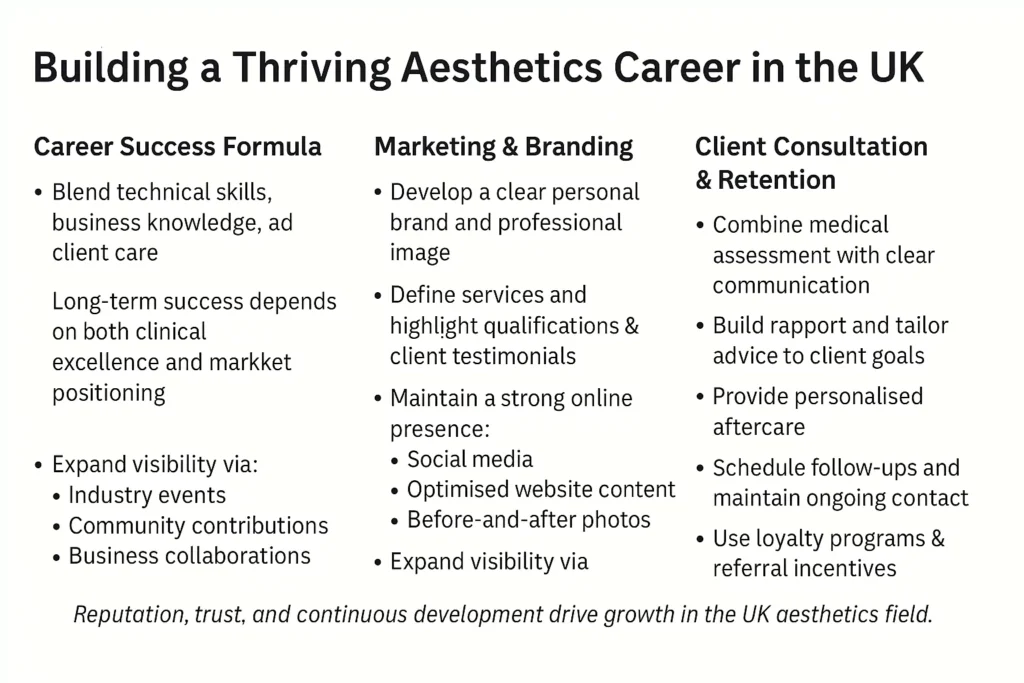
A thriving career in the UK aesthetics industry blends professional skill, business acumen, and client-focused service. While technical expertise is essential for delivering safe and effective treatments, your ability to position yourself in the market, manage client relationships, and operate efficiently determines long-term success.
Marketing yourself as an aesthetics practitioner begins with establishing a clear and consistent personal brand. This includes creating a professional image, defining your treatment offering, and building credibility through recognised qualifications and positive client feedback. An active online presence is vital, using social media, optimised website content, and before-and-after photography to showcase your work. Collaborating with complementary businesses, attending industry events, and contributing to educational or community platforms can also expand your visibility and position you as an expert in your field.
Setting up a clinic or mobile service in the UK requires understanding both regulatory obligations and market opportunities. Whether opting for a fixed-location clinic or a flexible mobile setup, compliance with hygiene standards, insurance requirements, and local authority guidelines is critical. A clinic benefits from a permanent professional environment, while a mobile service offers convenience and accessibility for clients who prefer treatments at home. Whichever model you choose, careful financial planning, investment in high-quality equipment, and attention to client comfort will help build trust and encourage repeat business.
Client consultation skills and retention strategies play a vital role in sustaining a loyal client base:
- Conduct consultations that combine medical assessment with clear communication to set realistic expectations.
- Build rapport by showing genuine interest in a client’s concerns, lifestyle, and desired outcomes.
- Provide detailed aftercare guidance tailored to the individual treatment and client needs.
- Schedule follow-up appointments to monitor results and address any post-treatment concerns.
- Maintain regular communication through personalised emails, seasonal promotions, or treatment reminders.
- Offer loyalty rewards or referral incentives to encourage repeat visits and word-of-mouth recommendations.
By combining technical expertise with a strategic approach to branding, operations, and personalised care, you can establish a sustainable and respected position in the UK aesthetics industry, one that grows through reputation, trust, and continuous professional development.